A wedding timeline is often created around practical things: when the ceremony begins, when dinner is served, when the music starts.
From a photography perspective, however, there is another question worth asking:
Will the timeline give the day enough space to unfold naturally?
After photographing weddings across Crete, we have found that the best timelines are rarely the ones packed with the greatest number of activities. They are the ones that leave enough room for people, movement, unexpected moments and the transitions between different parts of the day.
This becomes especially important at a destination wedding in Crete, where preparations, ceremony and reception may take place in completely different locations.
A good wedding photography timeline does not turn the day into a photoshoot.
It does the opposite.
It gives us enough time to photograph the wedding without constantly interrupting it.
The ceremony is usually the fixed point of the wedding day.
Once its starting time is confirmed, we can work backwards for preparations and forwards for portraits, reception and evening coverage.
Before deciding how much photography time you need, it helps to look at the day as a sequence of real locations and transitions:
In Crete, distances matter more than they may appear on a map.
A wedding can easily move from a hotel to a village church and then to a reception venue in another area. Travel therefore needs to be part of the photography timeline rather than treated as unused time.
For most weddings, photography does not need to begin the moment hair and makeup starts.
What matters photographically is the part of the preparation when the day begins to feel real.
That may include:
When both partners are getting ready in different locations, the schedule needs more flexibility — especially if one photographer is covering both preparations.
With a photography and film team, coverage can sometimes be divided more naturally between the two locations, depending on the structure of the wedding.
The objective is not to manufacture preparation photographs.
It is to be present when meaningful things actually begin to happen.
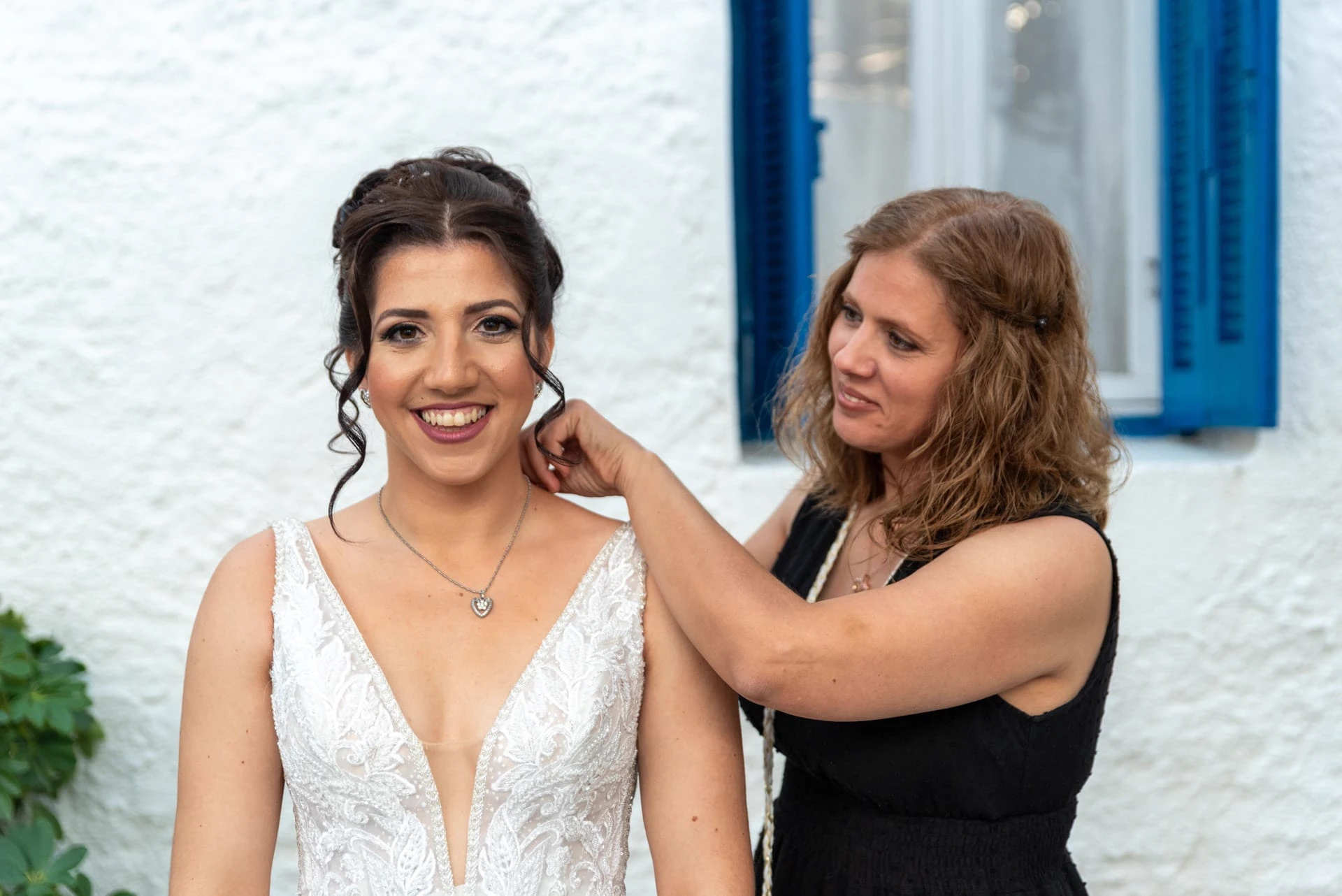
One of the simplest improvements to a wedding timeline is avoiding a schedule in which preparations end at exactly the moment everyone needs to leave.
Small delays happen.
A dress may take longer to fasten. Guests may arrive at the room. Someone important may be temporarily missing. Transport may take longer than expected.
A small buffer protects the rest of the day.
It also changes the atmosphere.
Instead of leaving the preparation location in a rush, there is enough time for a quiet moment with parents, friends or siblings before the ceremony begins.
Those moments often become more meaningful than anything we could have planned.
Many weddings we photograph in Crete include a Greek Orthodox ceremony.
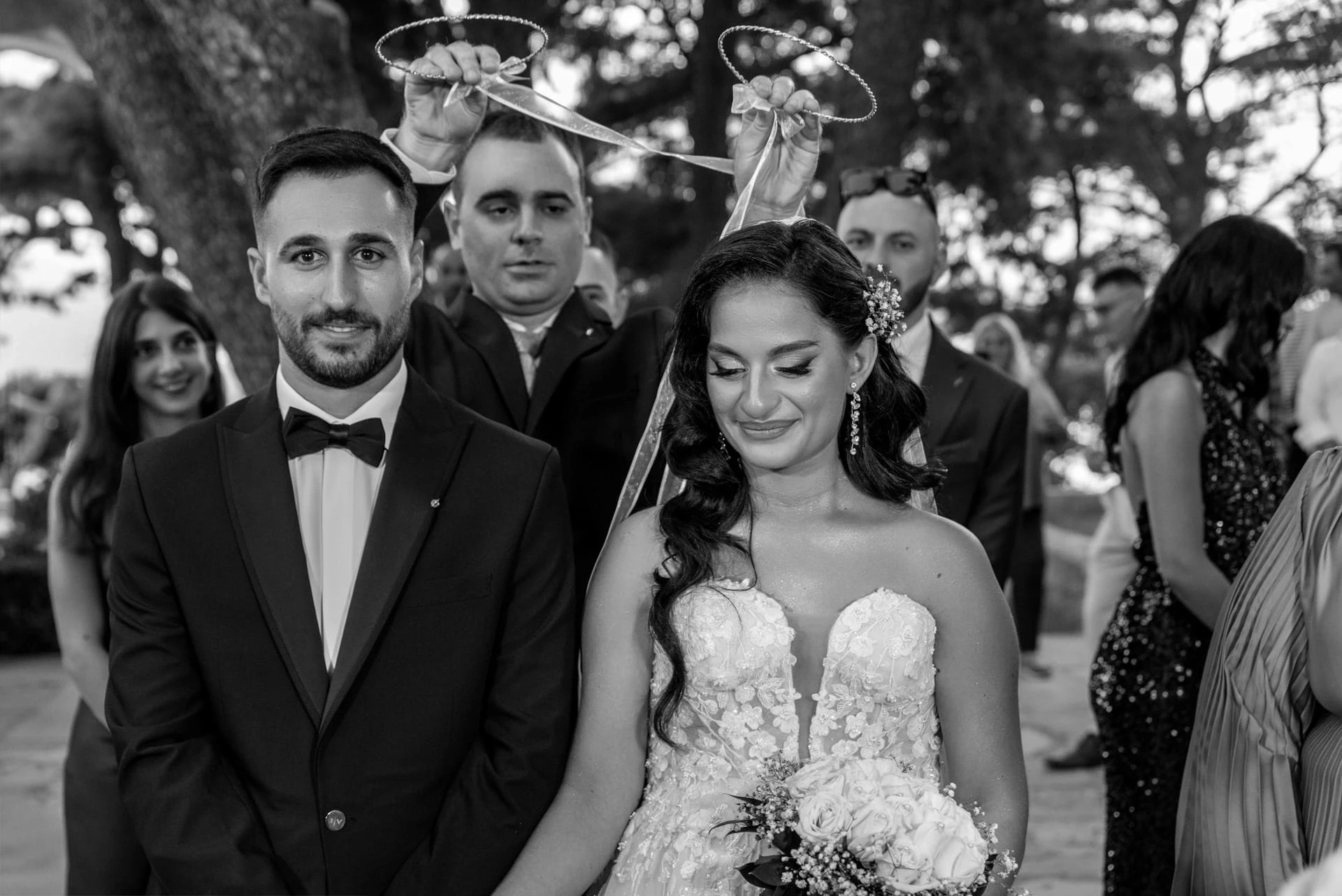
These ceremonies have their own rhythm and a sequence of important moments, including the exchange of rings, the crowning with the Stefana, the Common Cup and the ceremonial procession.
From a photography perspective, these are not moments that should be stopped, repeated or directed.
Our role is to understand the ceremony well enough to anticipate what is about to happen, choose the right position and document it without interrupting the flow.
This is one of the reasons why an Orthodox wedding timeline should allow the ceremony to unfold naturally rather than treating it as a rigid block that must finish at an exact minute.
Family photographs are important, but they can become one of the largest hidden delays in a wedding timeline.
The easiest approach is usually to keep the formal list focused.
Immediate family first.
Then grandparents or other relationships that genuinely matter.
Large combinations of cousins, friends and extended families can quickly turn fifteen minutes of photographs into forty-five.
Whenever possible, we recommend deciding the important combinations before the wedding rather than creating the list outside the church while guests are waiting.
This leaves more time for the celebration itself.
Most couples do not want to disappear from their own wedding for an hour and a half.
We don’t think they should.
Our approach to couple photography is usually built around relatively short periods of time rather than a long staged session.
Depending on the locations and schedule, portraits can happen:
The exact approach depends on the wedding.
What matters is that portraits become part of the day instead of taking the couple away from it.
For documentary wedding photography, the celebration still matters more than creating an enormous catalogue of posed photographs.
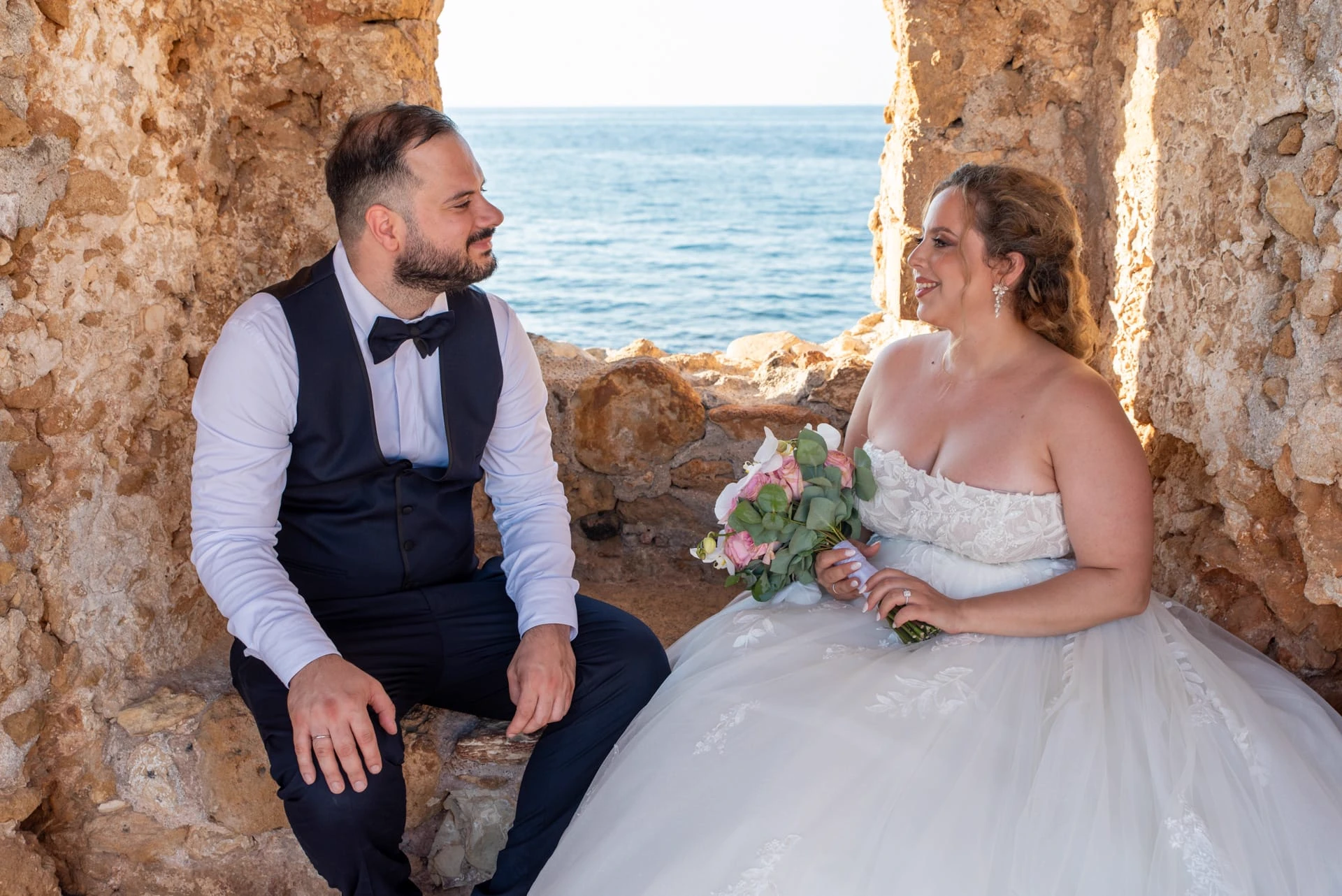
Light is one of the few parts of the wedding day that cannot be delayed.
During the summer months, the light earlier in the afternoon can be intense. Later in the day it usually becomes softer and more flattering for outdoor portraits.
That does not mean every wedding needs a long golden-hour photoshoot.
Often, ten or fifteen quiet minutes at the right moment can be far more useful than scheduling a full hour.
The exact timing depends on:
For this reason, we prefer planning around the real light and the actual location rather than using a generic rule such as “portraits at 7pm”.
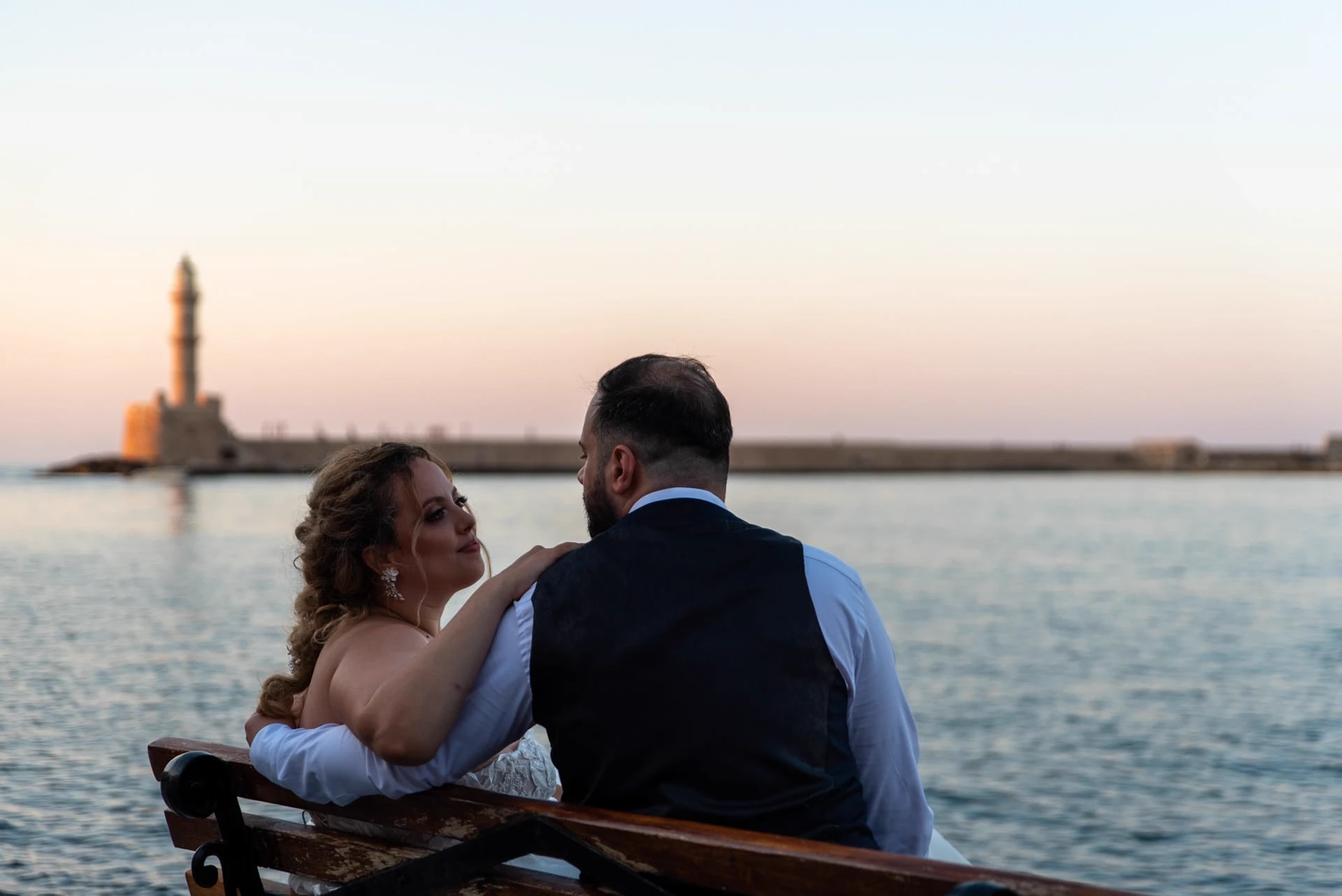
One part of destination wedding timelines that is often underestimated is the transition between the ceremony and the reception.
If the church and the venue are twenty or thirty minutes apart, the photography schedule cannot treat that time as if it does not exist.
And arrival itself takes time.
Guests park.
People greet each other.
The couple may want a drink.
Family members gather.
Sometimes there is an entrance, a welcome moment or another small tradition before dinner begins.
Photographically, these transitions are often valuable because people stop thinking about the ceremony and begin relaxing into the celebration.
They are part of the story.
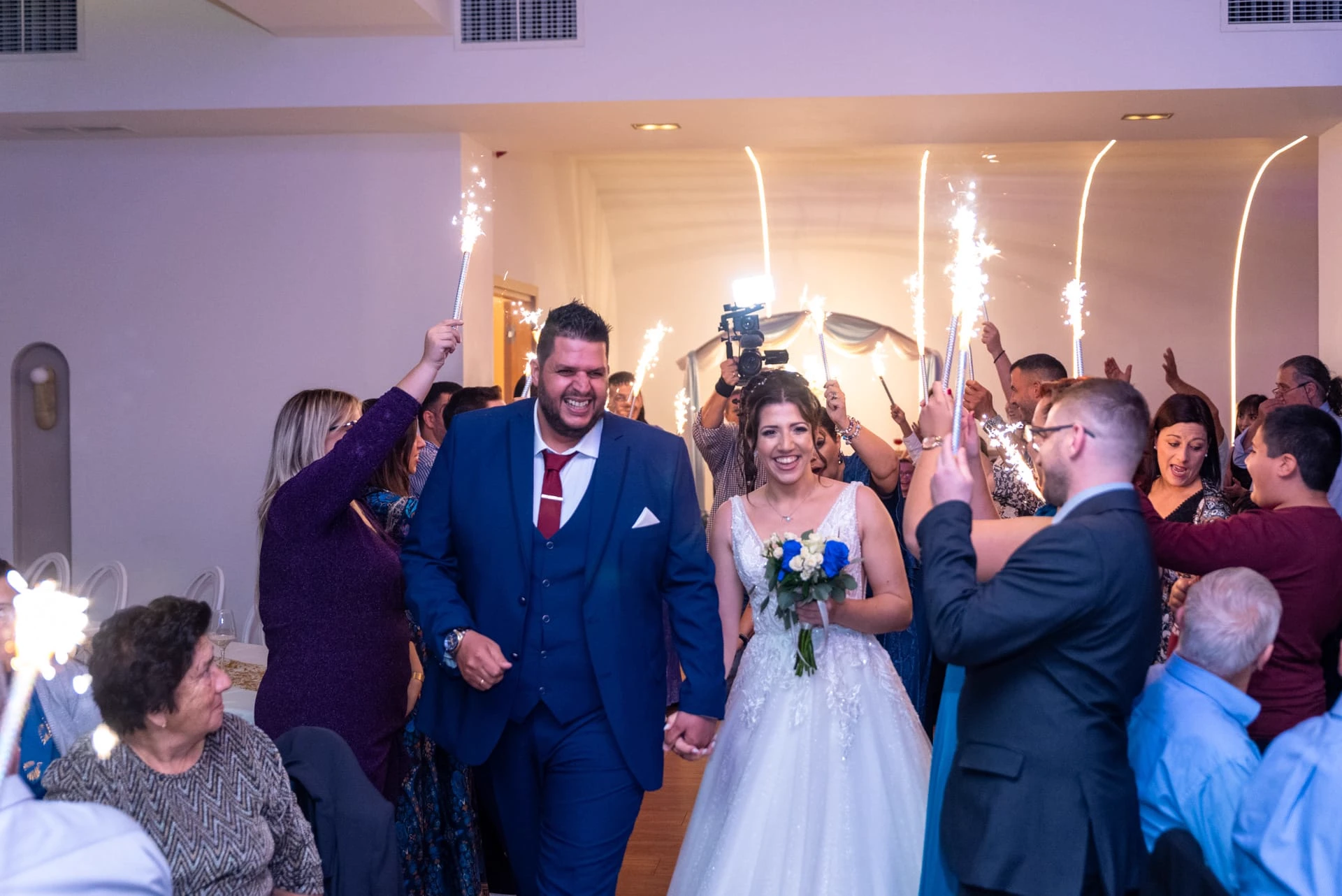
The reception is not simply the part of the day that comes after the ceremony.
For many couples, it is where the atmosphere changes completely.
The formal structure begins to loosen, people relax, conversations become more spontaneous and the celebration starts to feel less organised and more personal.
Reception coverage may include:
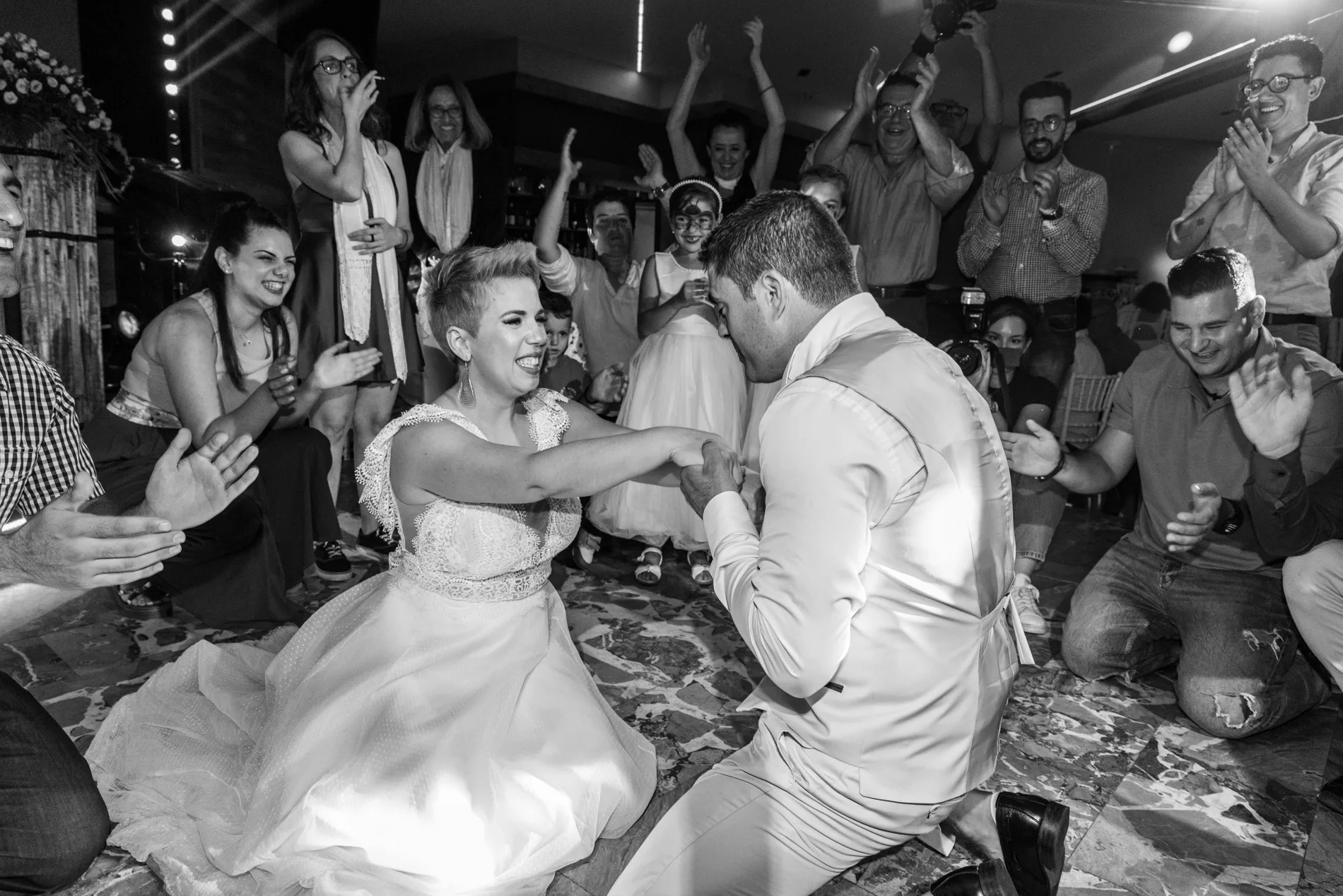
Not every wedding needs photography until the final song.
Usually, once the main reception moments have happened and the party has genuinely started, there is already enough time to document the change in mood and energy.
But if dancing, live Cretan music or the party itself is an important part of your wedding, it makes sense to protect enough photography time for it.
The reception is part of the story, not an optional collection of party photographs.
These are examples, not fixed schedules. The right timeline depends on the ceremony, locations, travel time and what parts of the day matter most to you.
A shorter coverage can work well when the different parts of the wedding are relatively close together and the day has a compact structure.
A possible flow:
This can be enough for a smaller wedding or a day where preparations, ceremony and reception do not involve long transfers.
For many weddings, eight hours gives the day more breathing room.
A possible flow:
This usually allows the story to feel much more complete without requiring photography from early morning until late at night.
Longer coverage becomes useful when the wedding includes:
A longer timeline is not simply about receiving more photographs.
Its biggest advantage is less pressure throughout the day.
There is more room for things to happen naturally.
A first look can change the structure of the wedding day considerably.
For some couples, it creates a quieter moment before the ceremony and can also allow us to complete part of the photography earlier in the day.
Depending on the wedding, a first look may make it possible to photograph:
before guests begin moving between locations.
This can make the period after the ceremony feel much more relaxed.
But a first look is not something every couple needs.
If seeing each other for the first time during the ceremony is emotionally important to you, there is no reason to change that simply because it makes the photography schedule easier.
The timeline should serve the wedding.
Not the other way around.
Usually, no.
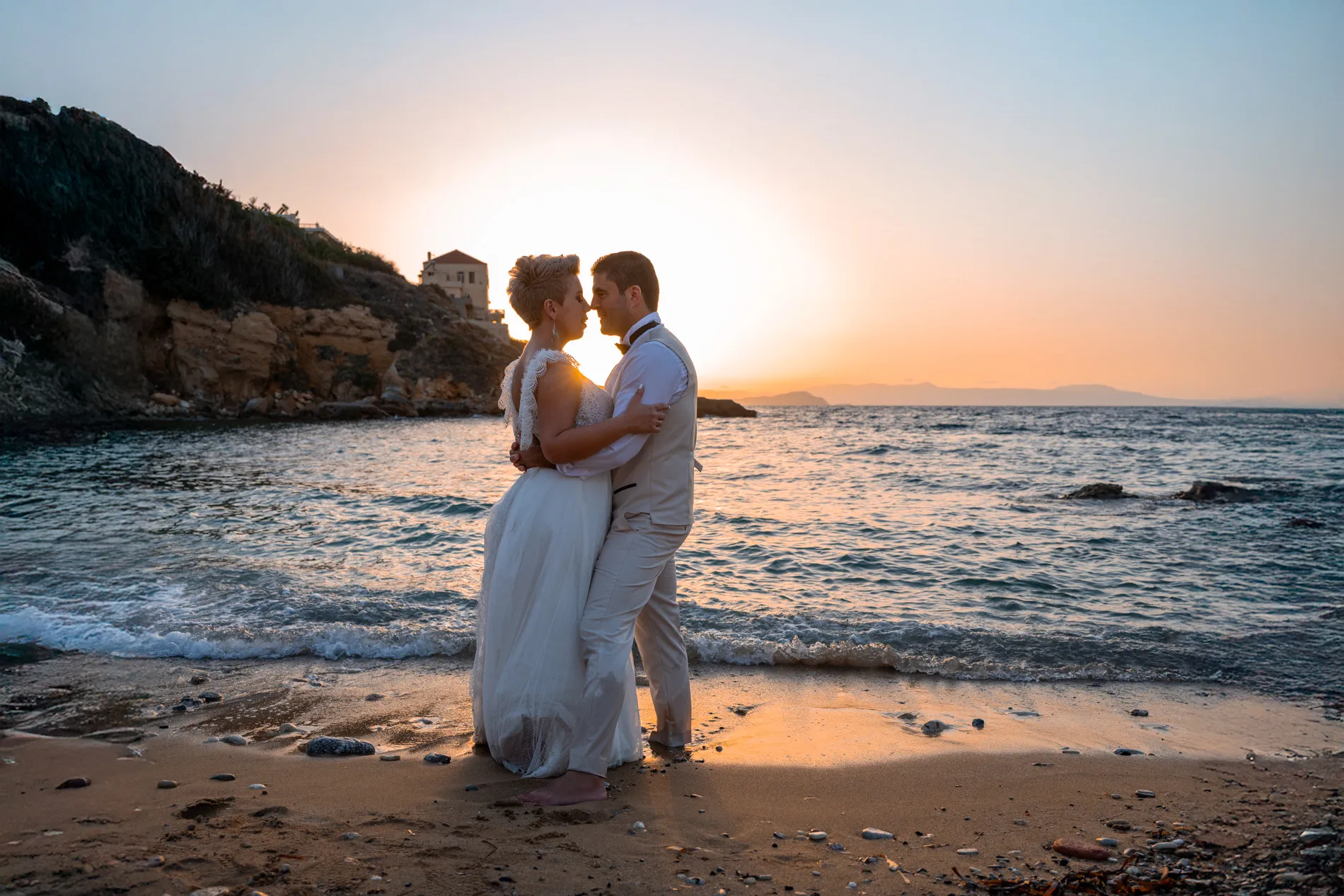
If the timing works naturally, we may suggest stepping away for a few minutes when the light becomes especially good.
That may be five minutes.
It may be fifteen.
Sometimes the celebration is too good to interrupt, and we simply stay with it.
The goal is never to sacrifice a real moment for a photograph we feel we “should” create.
A short portrait break can work beautifully when it fits the rhythm of the day, but it should remain just that — a short part of the wedding, not a second photoshoot.
When photography and videography are both part of the wedding day, the schedule should not contain separate blocks for each team.
We are documenting the same moments.
Good coordination means that:
This becomes especially important during intimate or emotional moments.
The less production the couple feels around them, the more naturally the wedding can unfold.
For destination weddings in Crete, where the day may already involve several locations and travel between them, a coordinated photo-and-film approach also helps keep the timeline simpler.
For destination weddings in Crete, travel is part of the wedding day.
If preparations, ceremony and reception take place in different locations, the timeline needs to include the actual movement between them.
A realistic flow may look like this:
Hotel preparation
↓
Travel
↓
Church or ceremony
↓
Family photographs
↓
Travel
↓
Short portrait stop, if it fits naturally
↓
Reception venue
↓
Dinner and celebration
This matters because a twenty- or thirty-minute transfer is not empty time that can simply be ignored.
It affects:
In Crete, this becomes especially important when a wedding moves between a hotel, a village church and a reception venue in another area.
Planning the timeline around the real locations usually makes the whole day more relaxed.
We do not expect couples to arrive with the photography schedule already solved.
Once the main parts of the day are known, we can help identify where more time is useful, where the schedule may be too tight, and where a small adjustment can make the day feel much more relaxed.
The questions we usually care about are simple:
From there, the timeline becomes much easier to build.
The purpose is not to control every minute.
It is to make sure the important parts of the day have enough space to happen naturally.
There is no single number that works for every wedding.
Six hours can be enough for a compact celebration with relatively short distances between locations, while eight or ten hours provide more flexibility when preparations, ceremony and reception take place in different areas.
The right amount of coverage depends less on the size of the wedding and more on how the day is structured.
Usually much less than couples expect.
We prefer a short, relaxed portrait session that fits naturally into the wedding day rather than taking you away from your guests for a long period.
In many cases, a brief session after the ceremony and another short moment later in softer light is more than enough.
Not necessarily.
Sunset can offer beautiful light, but the wedding should not be organised entirely around it.
If the timing works naturally, a short portrait break close to sunset can be useful. If the celebration is already in full flow, we would rather keep photographing the real experience than interrupt it unnecessarily.
Yes.
If preparations, ceremony and reception are in different locations, travel is part of the wedding day and needs to be included in the timeline.
This is especially important for destination weddings in Crete, where a hotel, church and reception venue may be in different areas.
Yes.
Once the main preparation, ceremony and reception details are known, we can help organise the photography side of the day so there is enough time for the important moments without making the wedding feel staged or overly scheduled.
Every wedding has a different rhythm.
A small celebration in one location needs a very different timeline from a destination wedding that moves between a hotel, an Orthodox church and a reception venue.
Our role is not to turn your wedding into a photography schedule.
It is to help create enough space for the people, emotions and moments that are already there.
If you are planning your wedding in Crete and want photography that follows the day naturally, you can explore our wedding photography in Crete and tell us what you are planning.
Prefer WhatsApp? +30 694 880 4256 • panagiotis@patsiotis.photography