One of the most common questions couples ask when planning a wedding is simple:
How many hours of photography do we actually need?
The answer is not determined only by the size of the wedding.
A small celebration can still require long coverage if preparations, ceremony and reception happen in different locations. A larger wedding can sometimes be photographed efficiently when everything takes place in one venue.
For weddings in Crete, the most important factors are usually:
The goal is not to book the largest number of hours possible.
It is to choose enough time to tell the story of the day without creating unnecessary gaps or pressure.
Wedding photography timeline in Crete
The number of hours you need is not really about the size of the wedding.
It is about how much of the story you want documented, and how the day is structured.
A few things usually make the biggest difference:
A wedding taking place mostly at one venue may need less coverage than a smaller celebration spread across several locations.
In Crete, this matters even more because a destination wedding can easily involve a hotel, an Orthodox church, a portrait stop and a reception venue in different areas.
So the better question is not:
“How many hours does a wedding normally need?”
It is:
“Which parts of our wedding do we want to remember?”
Once that is clear, the right amount of coverage becomes much easier to define.
Six hours can work very well for a wedding with a relatively compact structure.
It is usually most suitable when:
A realistic six-hour flow might include:
The important thing is to understand what six hours does not comfortably cover.
If both partners are getting ready in separate locations, the ceremony is far from the reception venue and you also want speeches, first dance and a substantial part of the party, six hours can quickly become restrictive.
For that reason, we look at the actual structure of the wedding rather than treating six hours as a standard package that suits everyone.
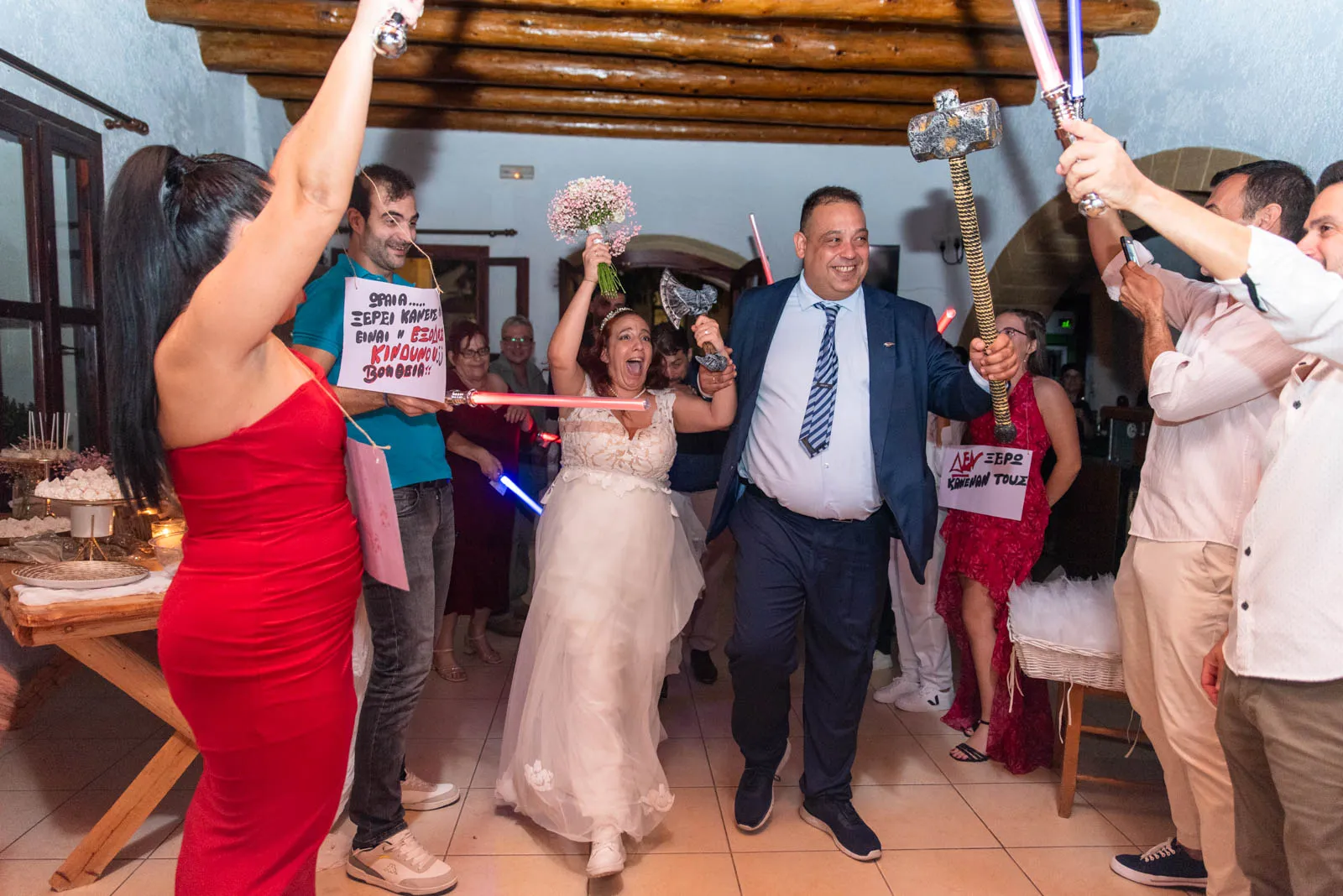
Eight hours is often enough to document a much broader part of the wedding day without making the schedule feel rushed.
It can work well when:
A realistic eight-hour flow might include:
The main advantage of eight hours is not simply that it produces more photographs.
It gives the day more space.
There is less pressure to leave preparations early, less need to rush portraits, and more flexibility if travel takes longer than expected or the ceremony starts late.
For many destination weddings in Crete, this is often where the coverage begins to feel genuinely complete.
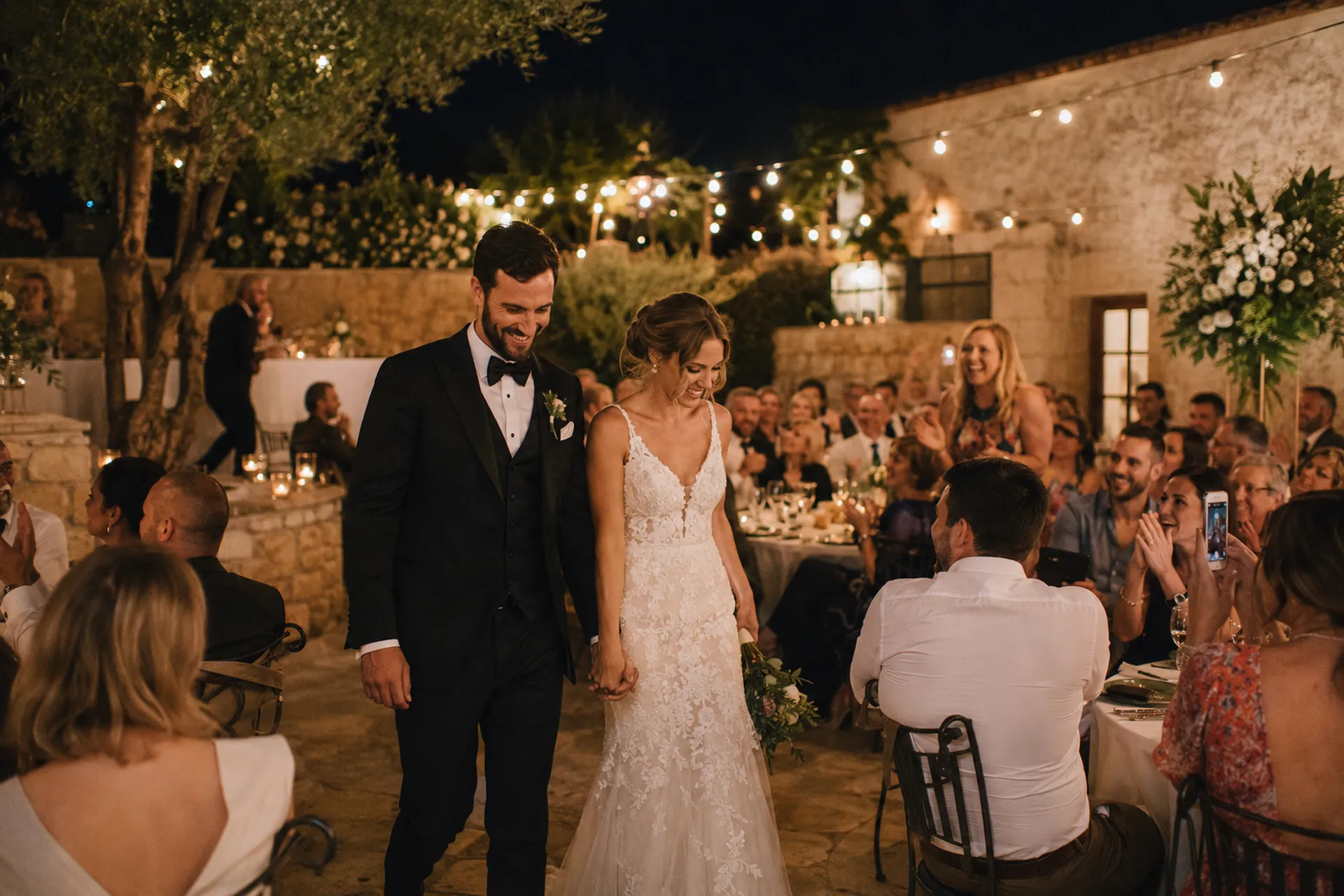
Ten hours of coverage is most useful when the wedding day has multiple locations, a longer schedule, or when the evening celebration is an important part of the story.
It can work well when:
A realistic ten-hour flow might include:
The main benefit of ten hours is not simply receiving more photographs.
It is having enough time to document the full change in atmosphere throughout the day — from quiet preparations to ceremony, celebration and evening energy — without constantly watching the clock.
For weddings in Crete that involve several locations or a strong reception programme, this can make the coverage feel significantly more complete.
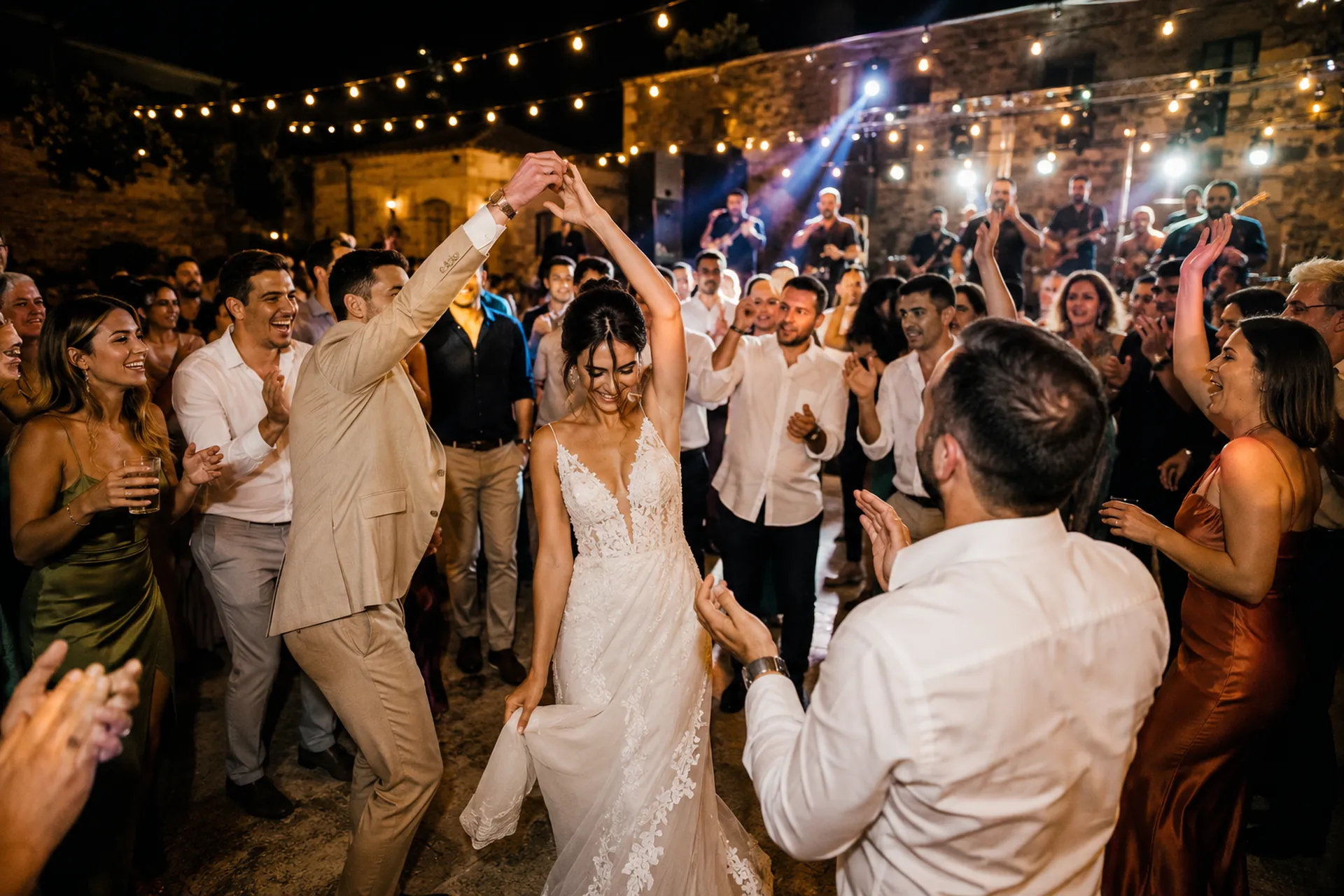
Not necessarily.
More hours can give the day more breathing room, but extra coverage only has value when there are meaningful parts of the wedding left to document.
For example, additional time can be useful when:
But if the main events are finished and the reception has settled into the same rhythm for several hours, extending coverage simply to reach a larger number does not automatically make the wedding story stronger.
We prefer to think in terms of meaningful coverage rather than maximum coverage.
The right number of hours should give us enough time to document the parts of the day that matter without adding unnecessary time simply because a larger package exists.
This is one of the biggest reasons why a wedding in Crete may need more coverage than expected.
A wedding day can easily move through several separate locations:
Each transfer adds time.
It also adds uncertainty.
Traffic, parking, guest movement, narrow village roads and the simple process of getting everyone from one place to another can all affect the schedule.
This does not mean every multi-location wedding needs ten hours.
But it does mean the photography coverage should be planned around the real geography of the day, not just the ceremony and reception times.
A six-hour wedding spread across four locations may feel much tighter than an eight-hour wedding held mostly at one venue.
When couples are planning from abroad, this is one of the first things we look at before recommending how much photography time makes sense.
Not always.
For some weddings, photographing both preparations adds an important part of the story — especially when the couple is getting ready with family and friends in different locations.
It can be particularly valuable when:
But if one preparation is very simple or happens much earlier, it may not be necessary to give both sides equal coverage.
What matters is not symmetry.
It is whether those moments contribute something meaningful to the wedding story.
When both preparations are important and they take place separately, the photography timeline needs enough time to move between them — or a second photographer / coordinated photo-and-film approach may make the coverage more practical.
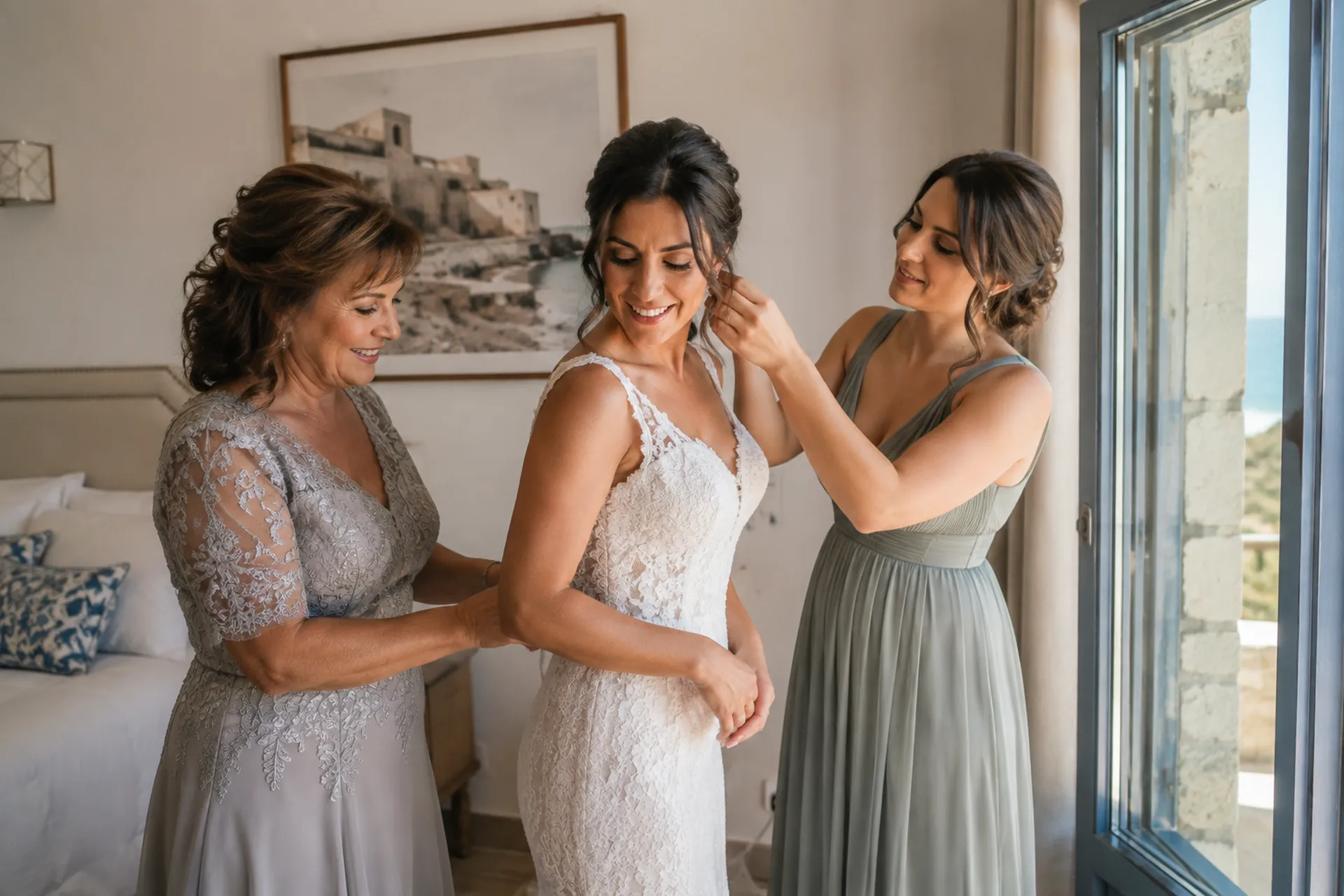
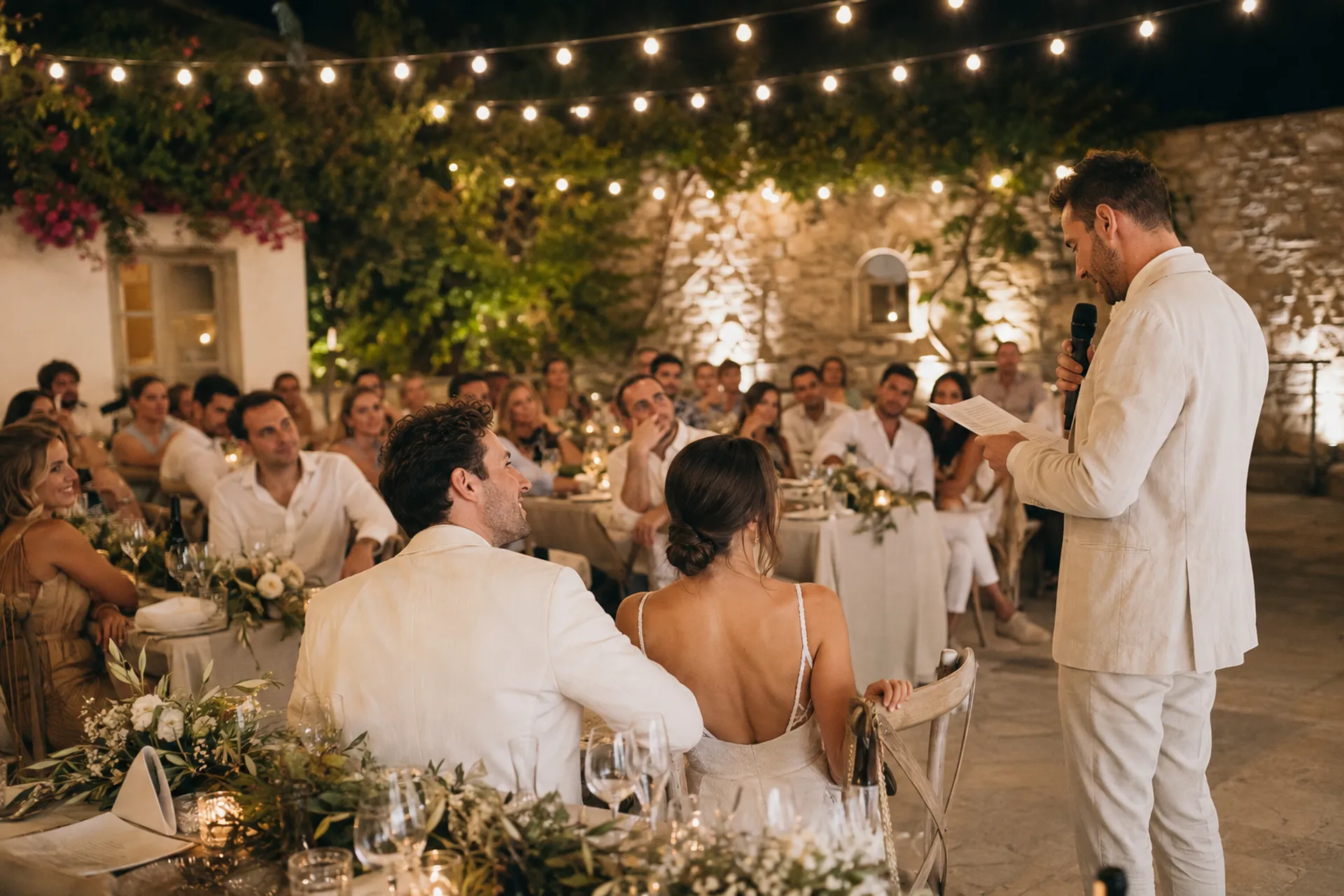
The reception can be one of the most unpredictable parts of the wedding day.
Some celebrations move quickly from dinner into speeches, first dance and a full dance floor.
Others take much longer to build.
If the reception is important to you, think about which moments you actually want documented:
You do not necessarily need photography until the very end of the night.
In many weddings, once the main reception events have happened and the dance floor is genuinely active, the story is already complete.
But if your wedding includes live Cretan music, a strong party, cultural traditions or an evening programme that matters to you, ending coverage too early can leave out an important part of the day.
This is why reception timing should be considered before deciding between six, eight or ten hours of photography.
Sometimes, yes.
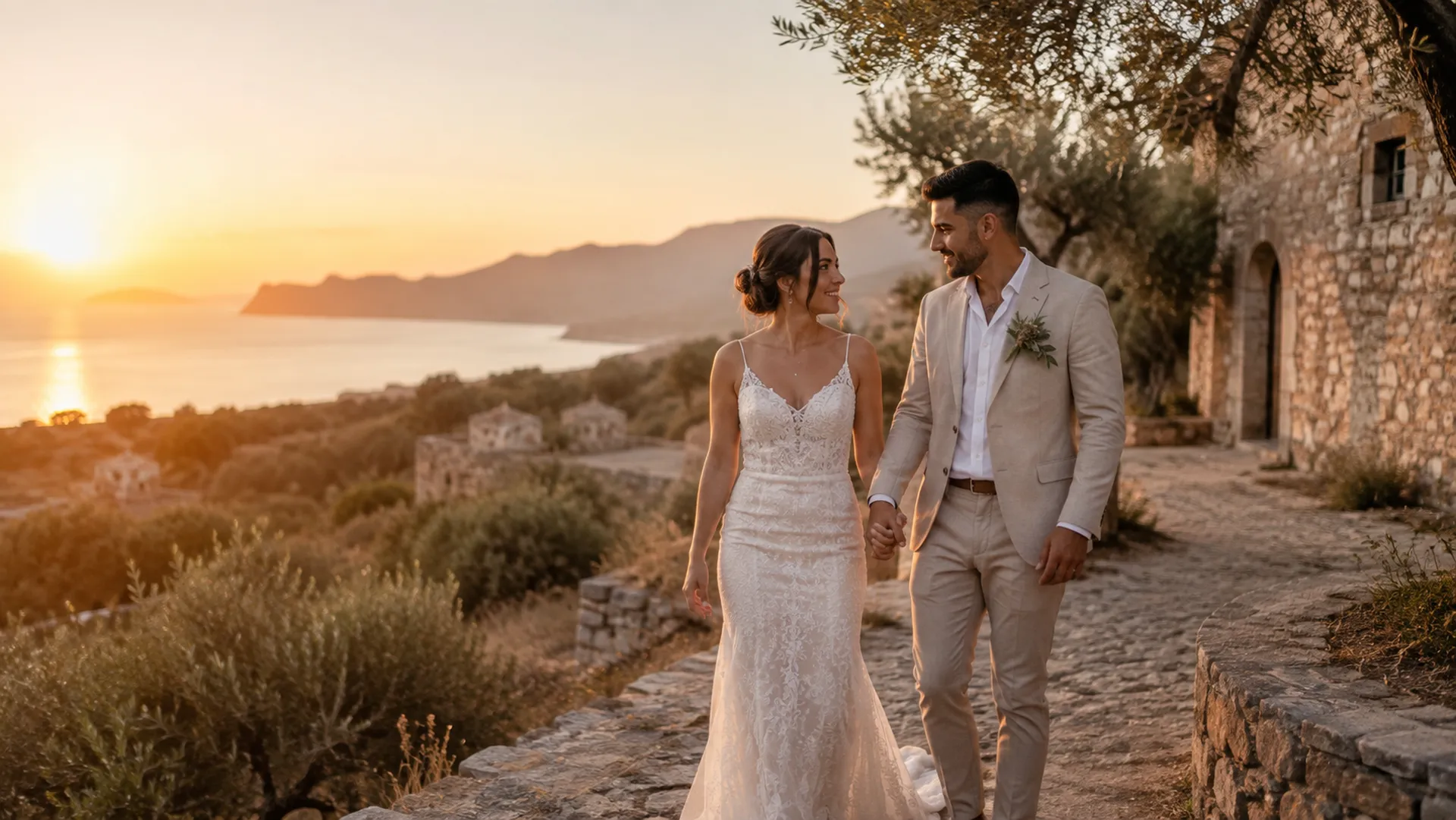
If sunset portraits are important to you, the photography coverage needs to include that part of the day.
This becomes especially relevant for summer weddings in Crete, where the ceremony may begin while the light is still strong and the softer evening light arrives later.
Depending on the schedule, sunset portraits may happen:
A sunset session does not need to be long.
Often, ten or fifteen minutes is enough.
But if your photography coverage is scheduled to finish before the best light arrives, then sunset portraits may simply not be possible.
For that reason, couples who care strongly about evening portraits should mention it when deciding how many hours of photography they need.
Sometimes.
When photography and videography are both part of the wedding day, the important question is not usually whether you need more hours simply because there are two services.
It is whether the day itself has enough meaningful moments to justify longer coverage.
A coordinated photo-and-film team can document the same parts of the day together:
What matters is coordination.
The couple should not need to repeat the same action for photography and then again for video.
Portrait time should be shared.
Ceremony positions should be planned so both photography and film can work without constantly blocking each other.
And during emotional moments, the presence of the team should feel as unobtrusive as possible.
For a multi-location destination wedding in Crete, this coordination can make a significant difference because the schedule is already affected by travel and transitions.
So photography and film do not automatically mean you need more hours.
But when both are important to you, the timeline should give the team enough space to document the day properly without making the wedding feel like a production.
For most weddings, the answer usually falls somewhere between six and ten hours.
But the right choice depends on the structure of the day, not on a fixed rule.
The key is not to choose the largest package.
It is to choose enough time so the important parts of the day can be photographed without rushing from one moment to the next.
If you are unsure, start with the actual locations and the moments you care about most. Once those are clear, the right amount of coverage usually becomes obvious.
It can be.
Six hours can work very well for a compact wedding where the preparation, ceremony and reception locations are close together and late-evening coverage is not a priority.
It becomes more restrictive when both preparations are in separate locations, travel is significant, or you want speeches, first dance and party coverage.
For many weddings, yes.
Eight hours often gives enough time for preparations, ceremony, family photographs, couple portraits, reception arrival and the main reception events.
It is especially practical when you want a complete story without extending photography very late into the night.
Ten hours becomes useful when the wedding has several locations, longer travel, two important preparation stories, a longer ceremony or a substantial evening programme.
It is also a better fit when live music, traditional dancing or the party itself is an important part of what you want to remember.
Not necessarily.
The number of guests matters less than the structure of the day.
A small wedding spread across several locations may require more photography time than a larger celebration taking place almost entirely at one venue.
Yes.
Travel between preparation locations, ceremony and reception is part of the real wedding day and needs to be considered when deciding how much coverage is required.
This is particularly important for destination weddings in Crete.
Usually, yes.
Once the preparation locations, ceremony time, reception venue and main priorities are known, it becomes much easier to see whether six, eight or ten hours makes the most sense.
Every wedding day has a different structure.
A celebration in one venue needs a very different amount of coverage from a destination wedding that moves between separate preparation locations, an Orthodox church and a reception venue.
The best starting point is not choosing a number of hours.
It is deciding which parts of the day matter most to you.
Once the locations, ceremony time and main priorities are clear, we can help you understand how much photography coverage makes sense without adding unnecessary time or making the day feel rushed.
If you are planning a wedding in Crete, you can explore our wedding photography in Crete and tell us how your day is coming together.
Prefer WhatsApp? +30 694 880 4256 • panagiotis@patsiotis.photography