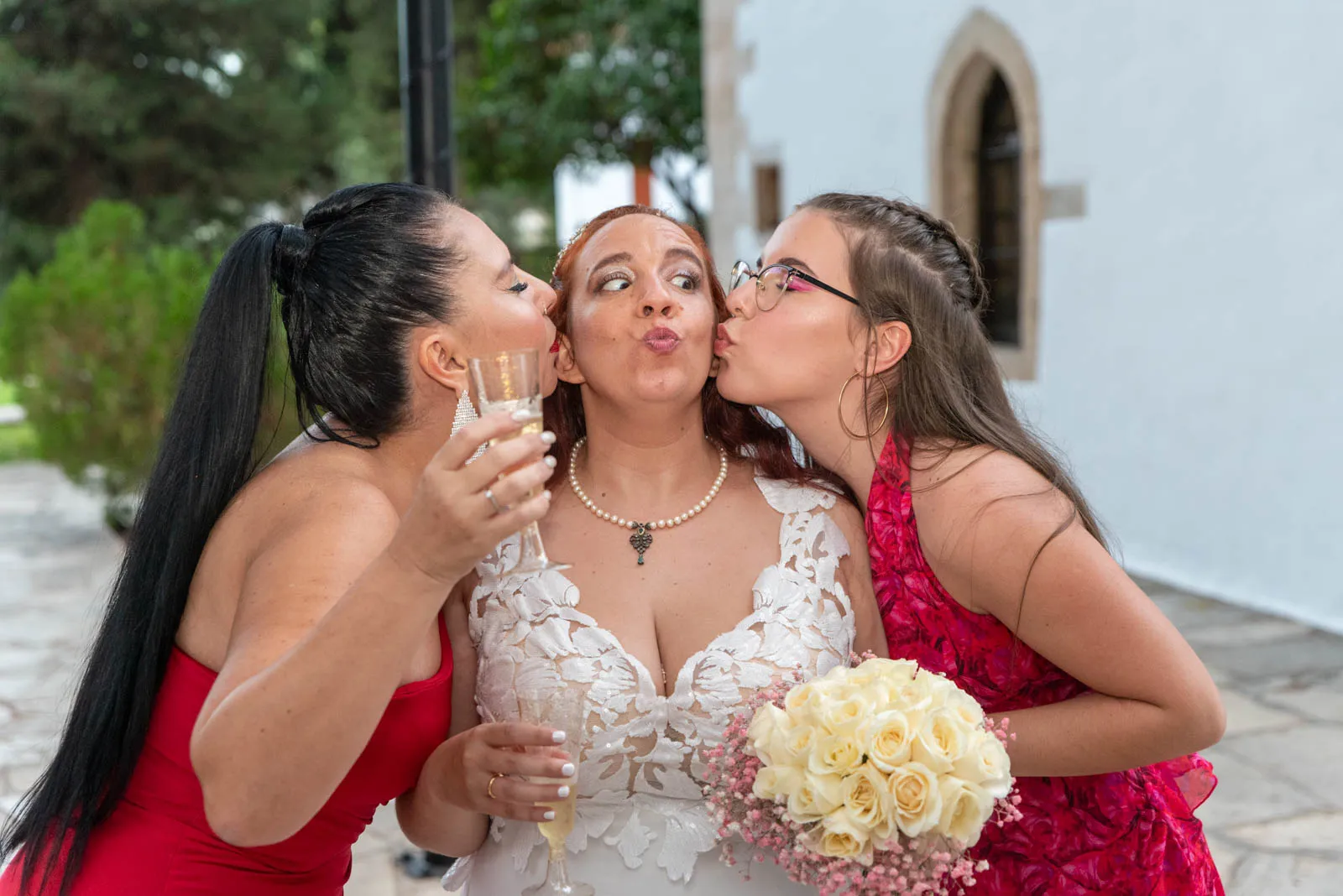
Planning a destination wedding in Crete often begins months before you arrive on the island.
At that stage, you may know the venue, the ceremony date and the general shape of the day, but not yet the exact travel times, light conditions or how long each part of the wedding will realistically take.
That is normal.
For photography, the most useful starting point is not a perfectly finished timeline.
It is having a clear picture of the main locations, the moments that matter most to you and how you want the day to feel.
From there, the photography plan can become more detailed as the wedding gets closer.
The aim is to avoid overplanning too early while still making sure the important parts of the day have enough time and space to be documented naturally.
You do not need to have every detail finalised months in advance.
But a few pieces of information make it much easier to plan photography realistically:
This gives your photographer enough context to understand how the wedding is structured and where time may be needed.
As the date gets closer, the plan can become more precise.
Final timings, transport details and smaller adjustments do not always need to be fixed at the beginning.
What matters first is understanding the shape of the day and the moments you do not want to miss.
Crete is a large island, and wedding locations that appear close on a map can still involve meaningful travel time.
A typical wedding day may move between:
The distance itself is only part of the picture.
Summer traffic, narrow village roads, parking, access to coastal locations and the time needed to move guests or suppliers can all affect the schedule.
For photography, this matters because travel time is still part of the wedding day.
If too much of the coverage is spent moving between locations, there is less time available for preparations, family photographs, portraits or the reception.
That is why a realistic photography plan should be based on actual travel times rather than simply looking at the distance between pins on a map.
When the main locations are known early enough, the timeline can be built with enough breathing room so the day does not feel rushed.
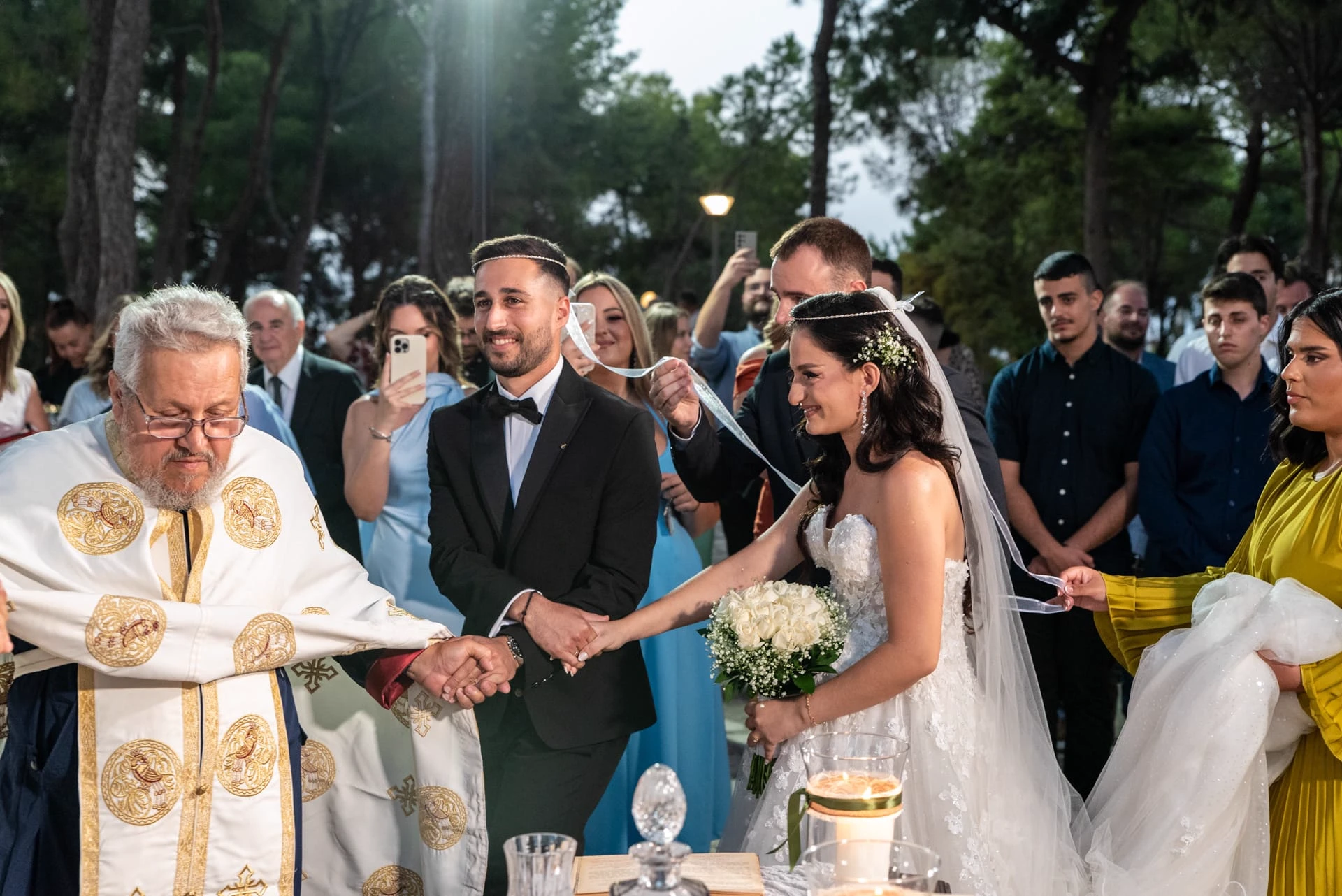
For many destination weddings in Crete, the couple gets ready in separate hotels, villas or family homes.
That can work perfectly well, but it needs to be considered when planning the photography timeline.
If both preparations are important to you, the main questions are:
In some weddings, a short period at each location is enough.
In others, especially when there are emotional family moments, details, gifts or traditions, more time may be needed.
The important point is not to force both preparations into an unrealistic schedule.
If the locations are too far apart, the better solution may be to prioritise the most meaningful parts of each preparation rather than trying to document everything.
A simple and realistic plan usually produces a much calmer start to the wedding day.
Light changes significantly throughout the day in Crete, especially during the warmer months.
A ceremony scheduled in strong afternoon sun will look and feel very different from one taking place later, closer to sunset.
This does not mean there is one “correct” ceremony time.
The important thing is understanding how the timing affects photography.
Earlier ceremonies can involve:
Later ceremonies often create softer conditions, but they also reduce the amount of daylight available before sunset.
That matters if you want time for family photographs, couple portraits or travel between the ceremony and reception.
The best approach is to look at the ceremony time together with the location, season and structure of the day rather than treating sunset as a separate photography slot.
A realistic timeline should leave enough room for the important photographs without forcing the wedding to follow the camera.
For a more detailed breakdown of how the different parts of the day fit together, see our guide to wedding photography timelines in Crete.
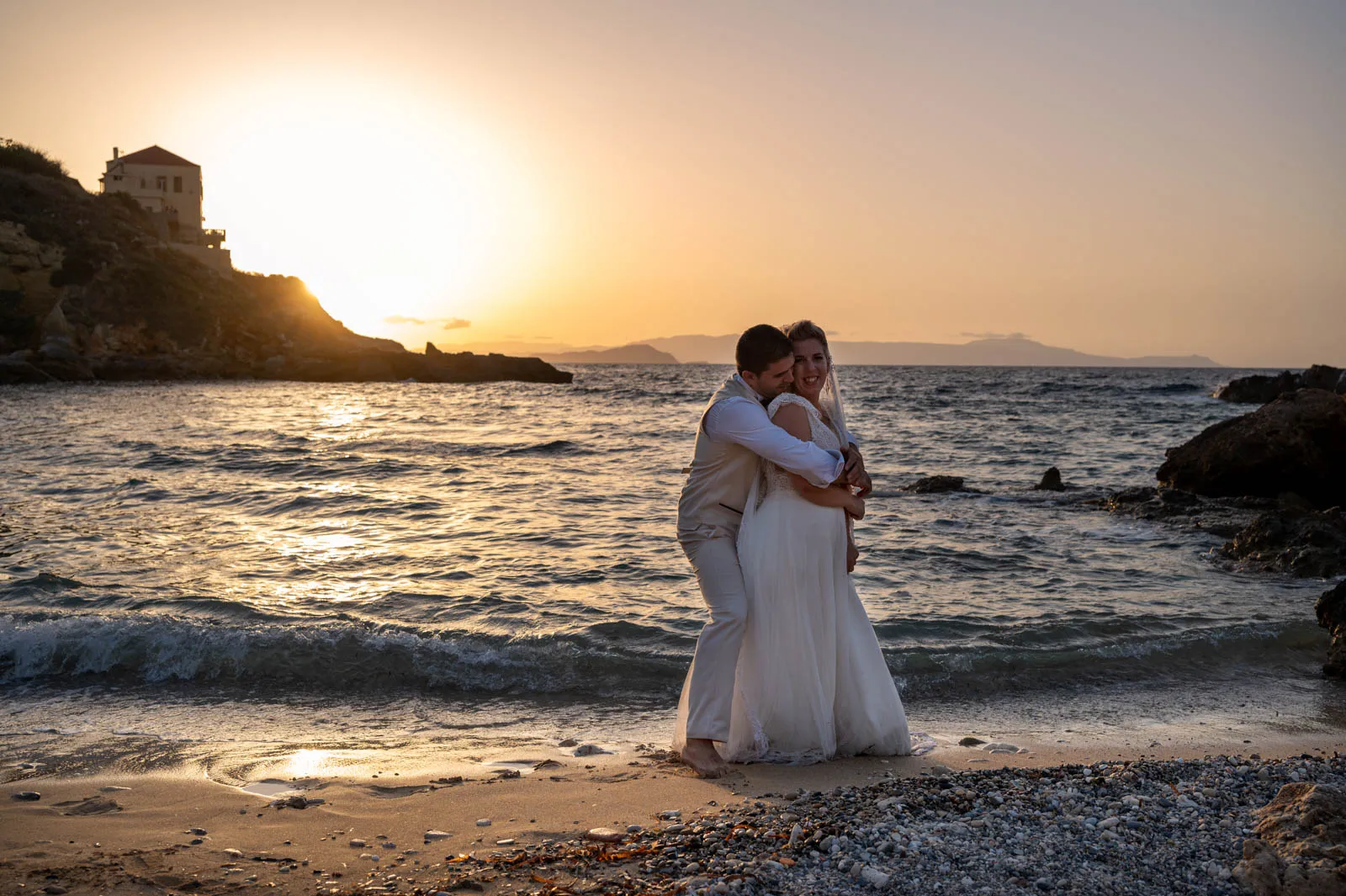
You do not necessarily need a long portrait session to create meaningful photographs of the two of you.
For many weddings in Crete, shorter portrait windows work very well when they are planned around the light and the natural flow of the day.
This can mean:
The advantage is that you are not taken away from your guests for too long.
It also allows the portraits to feel more relaxed, because they become part of the wedding day rather than a separate photoshoot.
The right amount of time depends on the location, the light, the distance between venues and how important couple portraits are to you.
For some couples, 15–20 focused minutes are enough.
For others, especially when the surroundings are an important part of the photographs, allowing more time gives greater flexibility.
The goal is not to maximise portrait time.
It is to create enough space for strong photographs without interrupting the celebration unnecessarily.
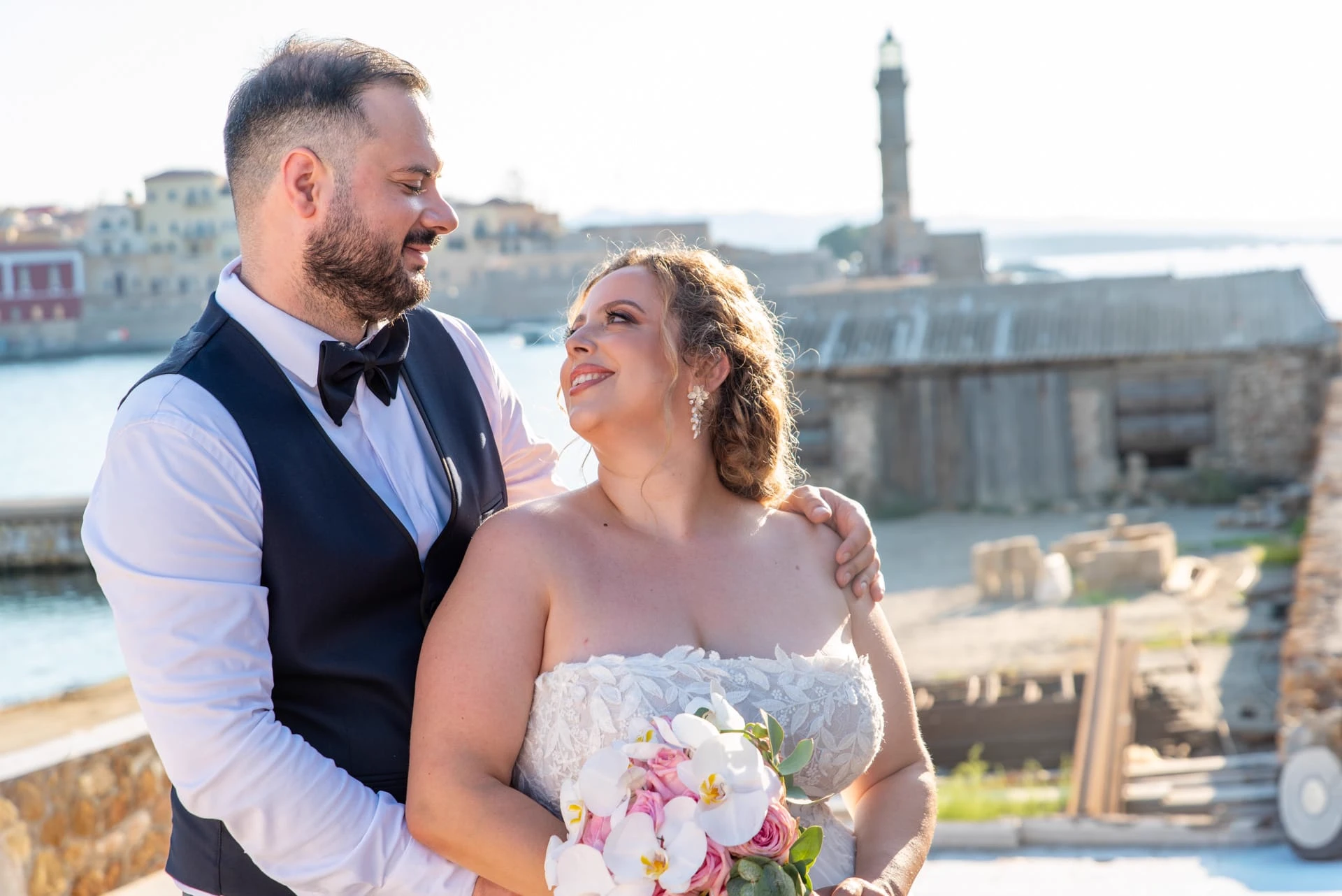
Family photographs are one of the easiest parts of a wedding day to underestimate.
At destination weddings, guests often travel from different countries and may not all know each other well. That can make group photographs slower if nobody knows in advance who needs to be included.
A simple family-photo plan helps enormously.
Before the wedding, it is useful to prepare a short list of the important combinations you want, such as:
The list does not need to include every possible combination.
It should focus on the photographs you would genuinely regret missing.
It also helps to choose one person from each side of the family who knows the guests and can help gather people quickly.
That small detail can save a surprising amount of time.
When family photographs are organised efficiently, they can usually be completed without turning into a long formal session or delaying the rest of the wedding.
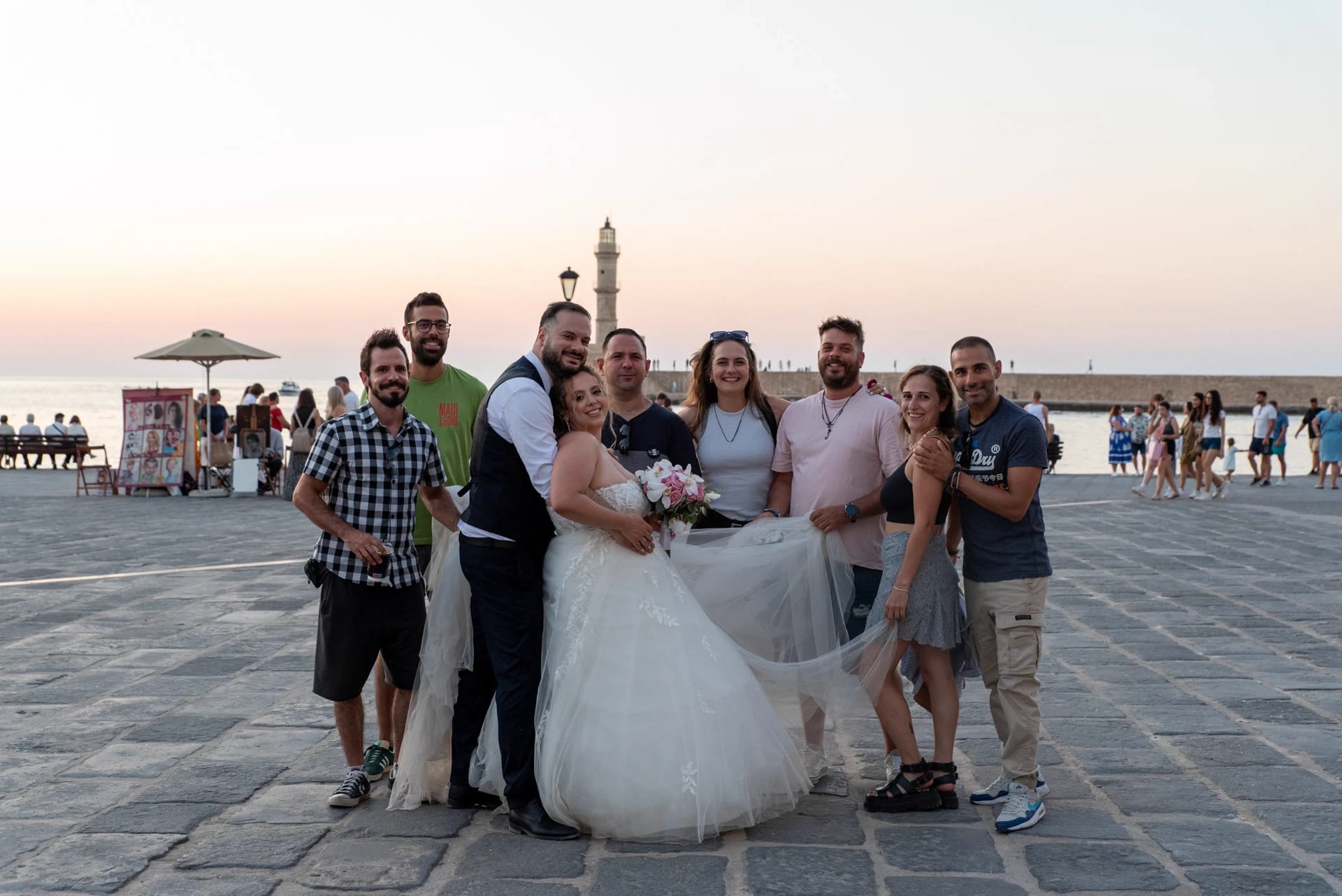
Not every wedding ceremony in Crete follows the same rhythm.
An Orthodox ceremony, a symbolic ceremony and a civil ceremony can differ in duration, structure, movement and the number of important moments taking place within a relatively short period of time.
For photography, that affects where attention needs to be placed and how the timeline should be planned.
An Orthodox wedding may include:
A symbolic or civil ceremony may be shorter and more flexible, but it can still include readings, personal vows, ring exchange or family participation that need to be anticipated in advance.
The important thing is not to treat every ceremony as if it were identical.
Knowing the ceremony type beforehand helps us understand its flow, identify the moments that matter most and plan photography without disrupting what is happening.
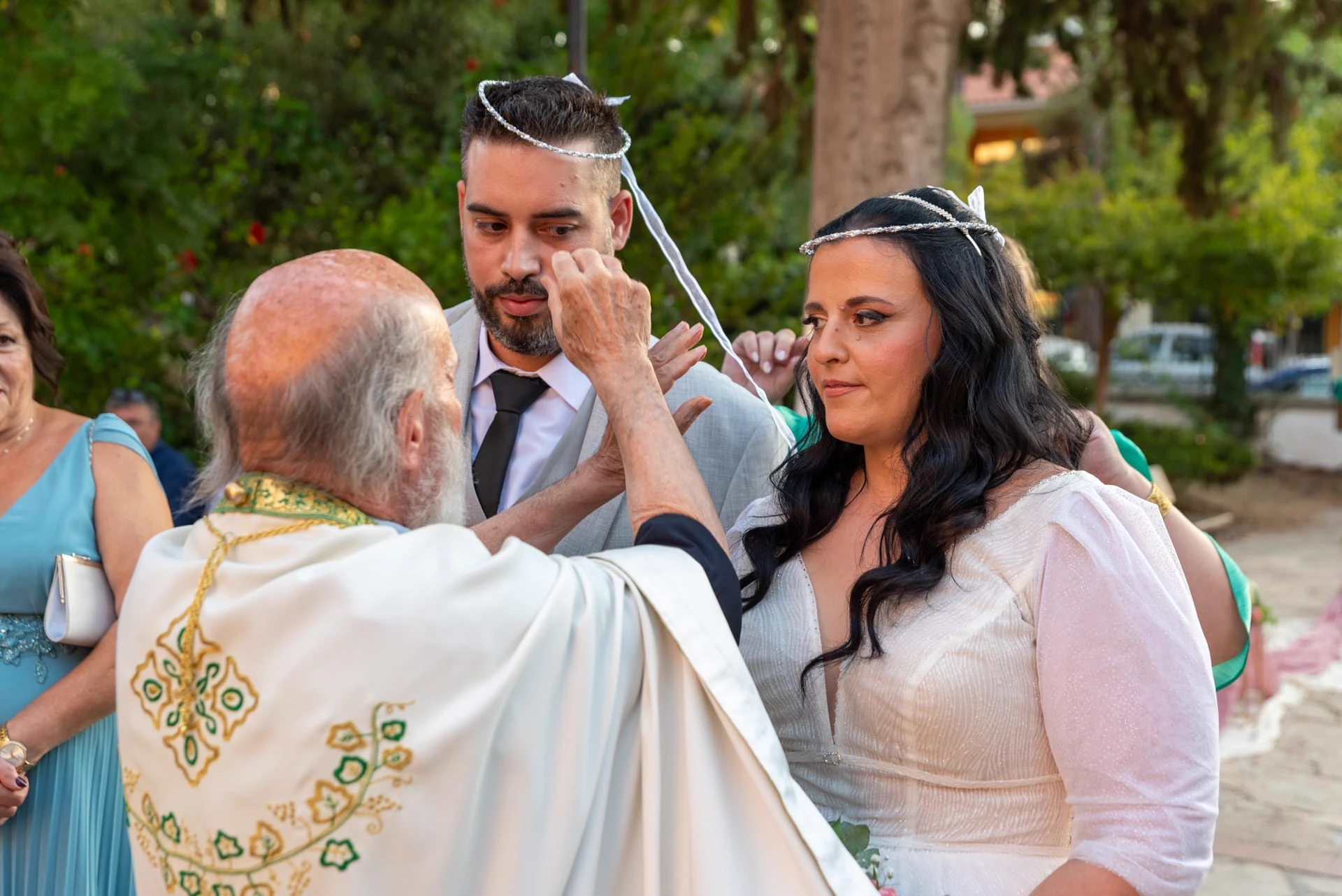
When photography and videography are part of the same wedding coverage, they should be planned around the same timeline from the beginning.
If the two are treated as separate productions, the day can quickly become more complicated than it needs to be.
The same portrait session, ceremony moments and reception events should work for both photography and film without asking you to repeat anything.
A shared plan helps with:
It also makes it easier for both mediums to tell the same story in a consistent way.
Photography preserves individual moments.
Film adds movement, sound and continuity around them.
When both are coordinated properly, they complement each other without adding unnecessary interruption to the wedding day.
For couples considering both, you can also see how we approach wedding photography and videography in Crete.
There is no single number of hours that works for every wedding in Crete.
The right amount of coverage depends mainly on:
A wedding taking place almost entirely at one venue may need less coverage than a day that moves between separate preparation locations, a church, a portrait location and a reception venue.
The important thing is not to choose a number of hours first and then try to force the wedding into it.
It is better to look at the structure of the day and work backwards from the moments you want documented.
That usually leads to a more realistic timeline and avoids paying for time you do not need or, on the other hand, running out of coverage before important parts of the celebration.
For a more detailed breakdown, see our guide to how many hours of wedding photography you need in Crete.
A destination wedding in Crete can be planned very effectively from abroad.
You do not need to visit the island several times or have every small photography decision fixed months in advance.
Some things are worth establishing early:
Other details are better confirmed closer to the wedding.
These can include:
This approach keeps the planning practical.
You secure the important structure early, while leaving enough flexibility for the parts that depend on real conditions in Crete.
For most destination weddings, that balance works better than trying to plan every photograph before you arrive.
Before you travel, it is useful to make sure the photography plan includes the final practical details.
A simple checklist is enough:
You do not need to overcomplicate this.
The purpose is simply to remove avoidable uncertainty before the wedding day.
Once the key information is confirmed, the photography plan can stay flexible enough to respond to the real conditions on the day — including weather, light, traffic or small timing changes.
That balance is especially useful for destination weddings, where not every detail can or should be fixed months in advance.
No. Most of the planning can be handled remotely before you arrive in Crete.
Email, WhatsApp and, when useful, a video call are enough to discuss the structure of the day, locations, timings and the moments that matter most to you.
If it makes sense to meet after you arrive, we can arrange that separately, but it is not essential for the photography planning to work well.
You can send the general structure of the day as soon as it becomes clear.
The final version is more useful closer to the wedding, once ceremony times, transport and reception details are confirmed.
Small changes are normal, so the timeline does not need to be treated as fixed too early.
Yes.
We can review the structure of the day and help you understand where photography needs more time, where the schedule may be too tight and how light or travel between locations could affect the coverage.
The aim is not to redesign your wedding around photography, but to make sure the timeline is realistic.
That is normal, especially with destination weddings planned several months in advance.
As details change, the photography plan can be adjusted around the updated ceremony time, locations and structure of the day.
The important thing is to let us know about significant changes that affect travel, coverage or timing.
Yes.
When both are included, photography and film can follow the same timeline and work around the same important moments.
This avoids unnecessary repetition and makes the coverage feel more coordinated throughout the day.
Not always.
It is useful to know the general plan, but the exact spot can sometimes be confirmed closer to the wedding depending on the venue, available time, weather and light.
For many weddings, keeping some flexibility produces a better result than fixing every detail months in advance.
Planning photography from another country does not need to be complicated.
If you already know your wedding date, main locations and the general structure of the day, that is enough to start.
From there, we can help you understand what photography coverage makes sense, where the timeline may need more space and which details can wait until closer to the wedding.
The goal is to keep the planning clear, realistic and flexible enough for the wedding day itself.
Prefer WhatsApp? +30 694 880 4256 • panagiotis@patsiotis.photography