Anna & Aris
Vafes & Kontaros, Crete
A village wedding shaped by family, Orthodox tradition, music and the atmosphere of Apokoronas.
View Wedding StoryTraditional Cretan weddings are not defined by one single custom or ceremony.
What makes them distinctive is the way family, place, music, hospitality and community come together around the couple.
In many of the weddings we photograph in Crete, the day extends far beyond the formal ceremony itself.
Preparations may involve several generations of the family. The ceremony can be deeply connected to the local church and village. Music often becomes part of the movement of the day rather than simply entertainment at the reception.
And once the celebration begins, the atmosphere is usually shaped as much by the people around the couple as by the couple themselves.
That is why a traditional Cretan wedding often feels less like a carefully separated sequence of events and more like one continuous celebration.
This guide looks at what these weddings are really like through first-hand experience photographing them across Crete — not as a list of folklore, but as living family celebrations that still carry a strong sense of place and identity.
Traditional Cretan weddings are deeply social events.
The couple is central, but the celebration is rarely experienced only as a private moment between two people.
Parents, grandparents, siblings, relatives, friends and often the wider local community all become part of the day.
That can be visible from the preparations onwards.
Family members may move constantly through the house, help with clothing and details, welcome guests, organise practical parts of the day and take part in traditions that have meaning specifically within that family.
At the ceremony, relatives are not simply spectators.
They are often closely connected to the emotional rhythm of what is happening.
And at the reception, that involvement becomes even stronger through music, dancing, speeches, food and the way people gather around the couple.
From a photography perspective, this matters because many of the most important moments are not staged.
They happen between generations, across tables, during preparation, in brief reactions during the ceremony or in the middle of the celebration.
A traditional Cretan wedding therefore cannot be documented well by focusing only on the couple.
The wider family and community are part of the story.
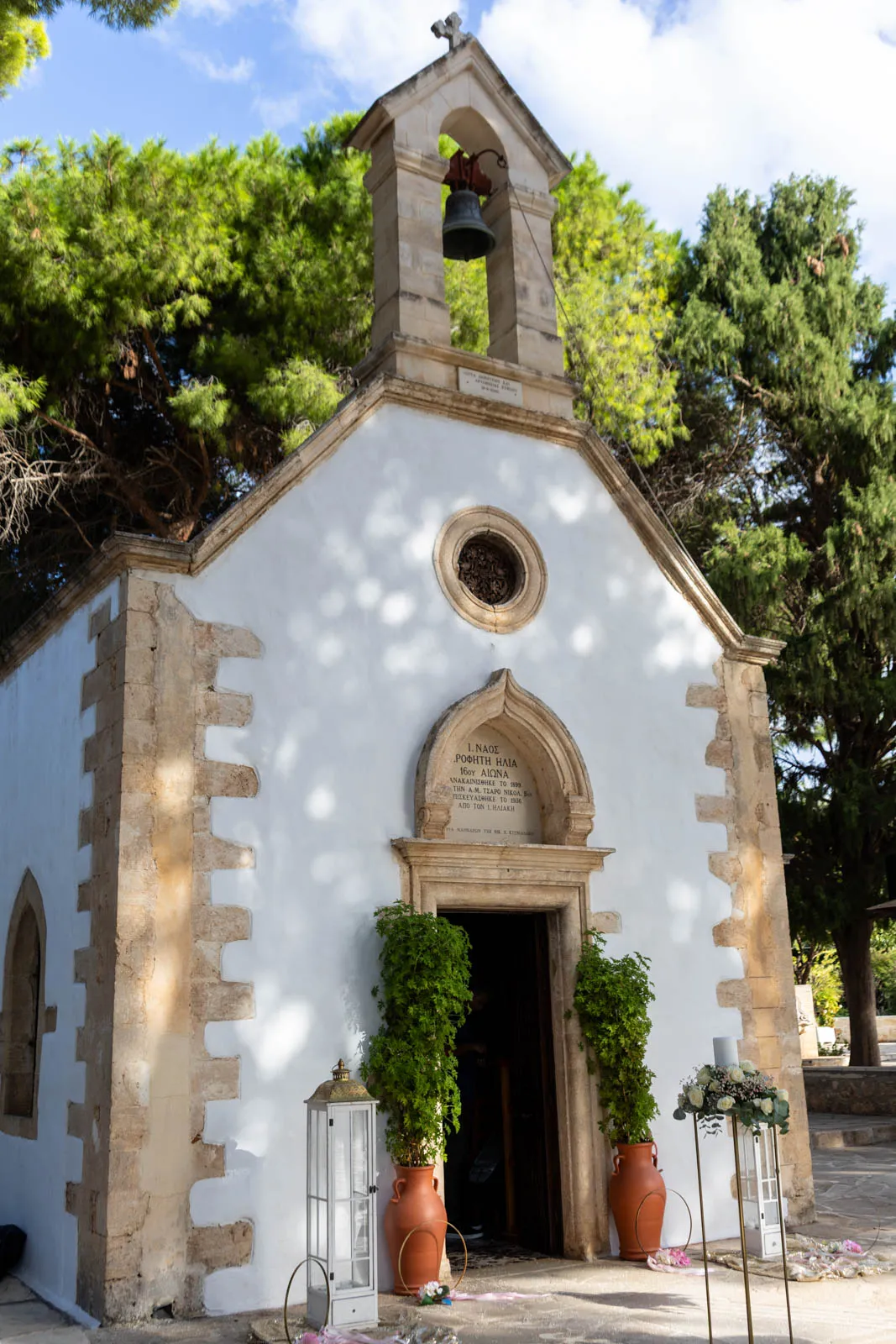
A traditional Cretan wedding often feels different when the celebration is closely connected to a village.
The setting is not just a backdrop.
The church, the family home, the village streets and the reception space can all become part of the identity of the day.
Guests may already know one another, relatives may live nearby, and the movement between different parts of the wedding can feel more communal than formal.
That creates a very different rhythm from a wedding taking place entirely inside a resort or a single venue.
In village weddings, there is often more interaction between the couple, their families and the place itself.
People gather outside homes, move through narrow streets, meet at the church and continue the celebration in spaces that already carry family history and local meaning.
For photography, this gives the story more layers.
The environment helps explain where the wedding belongs, while the people give that place emotional context.
This is one of the reasons village weddings in Crete can feel especially rooted and personal.
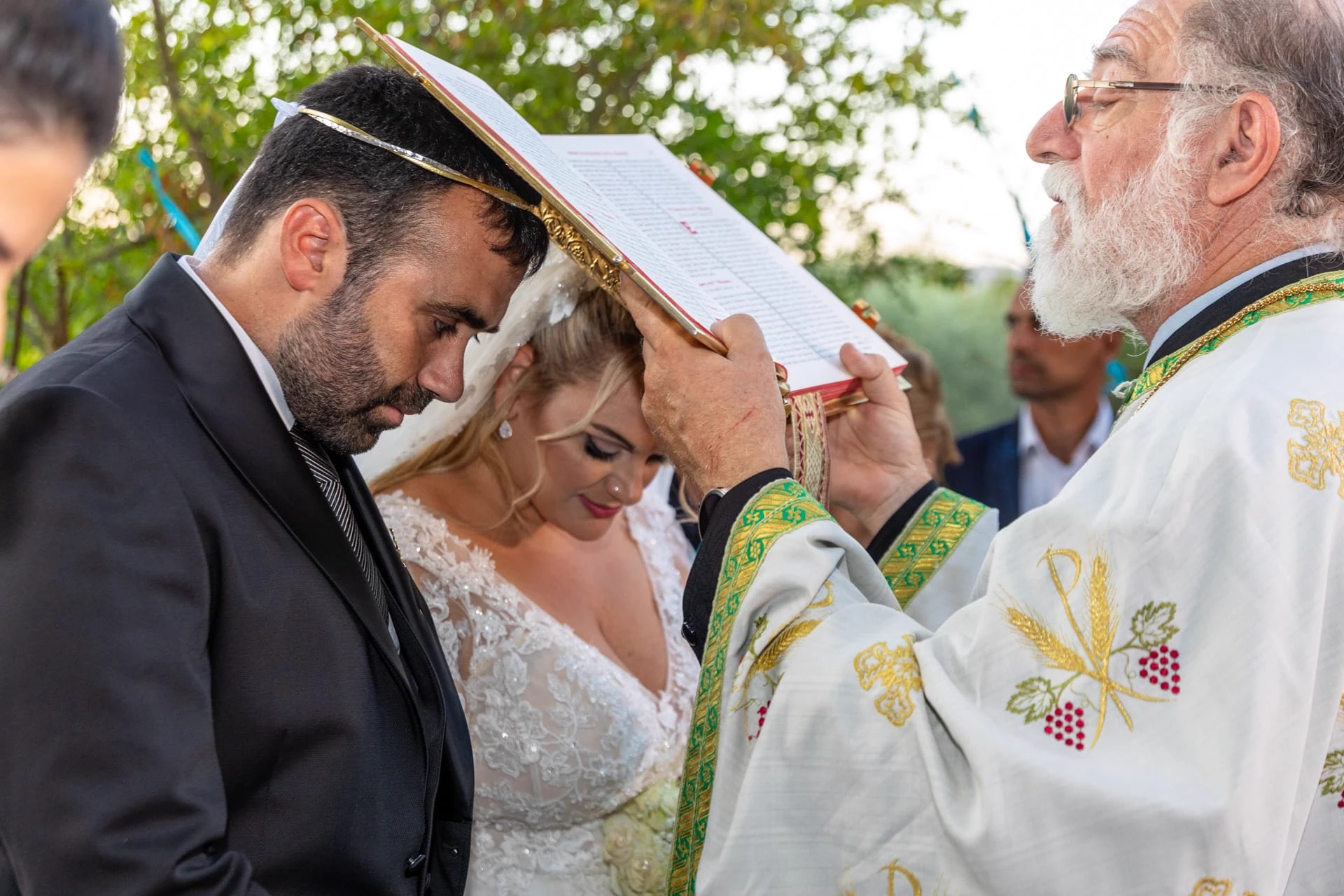
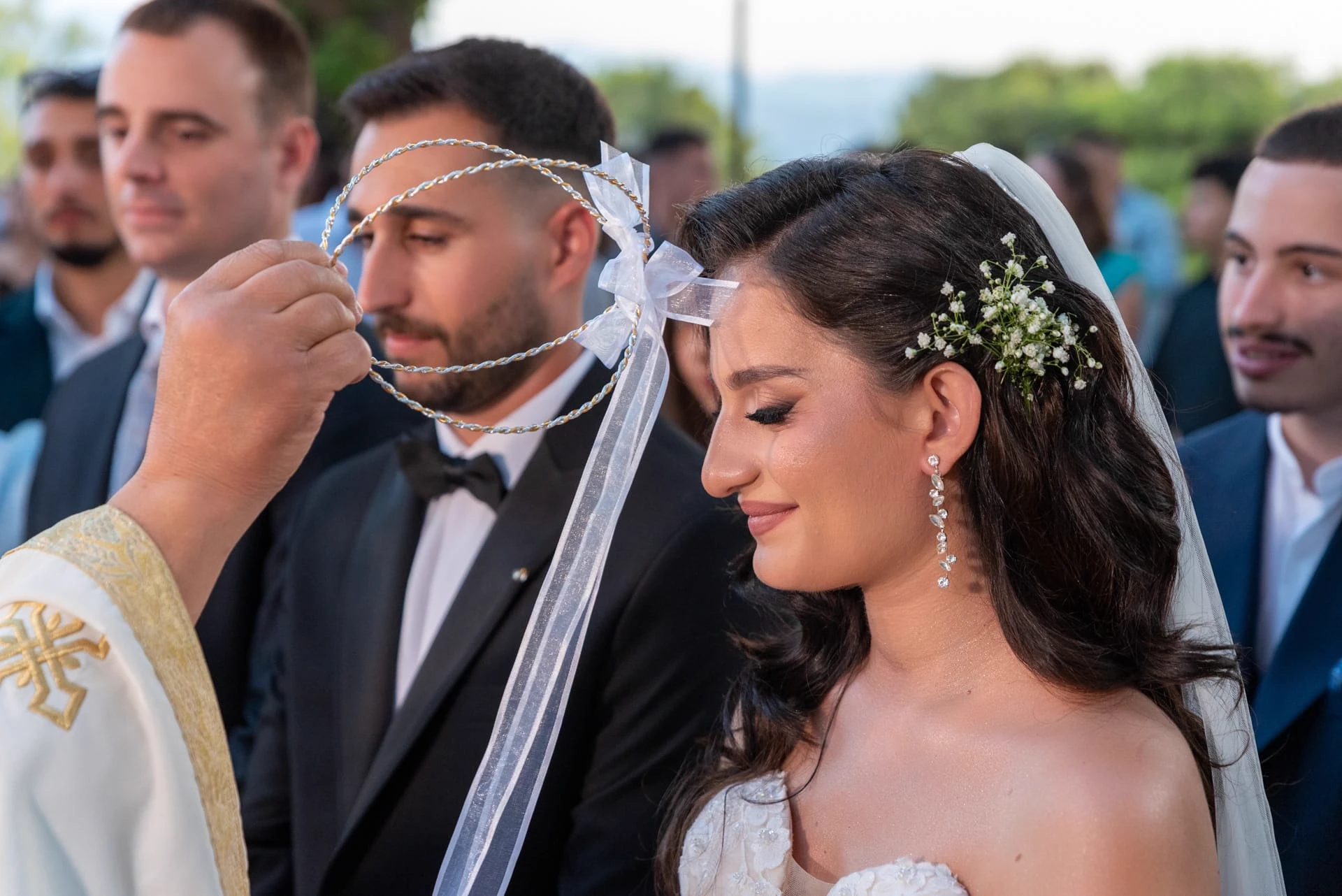
For many traditional Cretan weddings, the Orthodox ceremony is one of the most important anchors of the day.
It is not simply the formal part before the reception.
The ceremony carries its own rhythm, symbolism and family involvement, and it often connects directly with the wider character of the celebration.
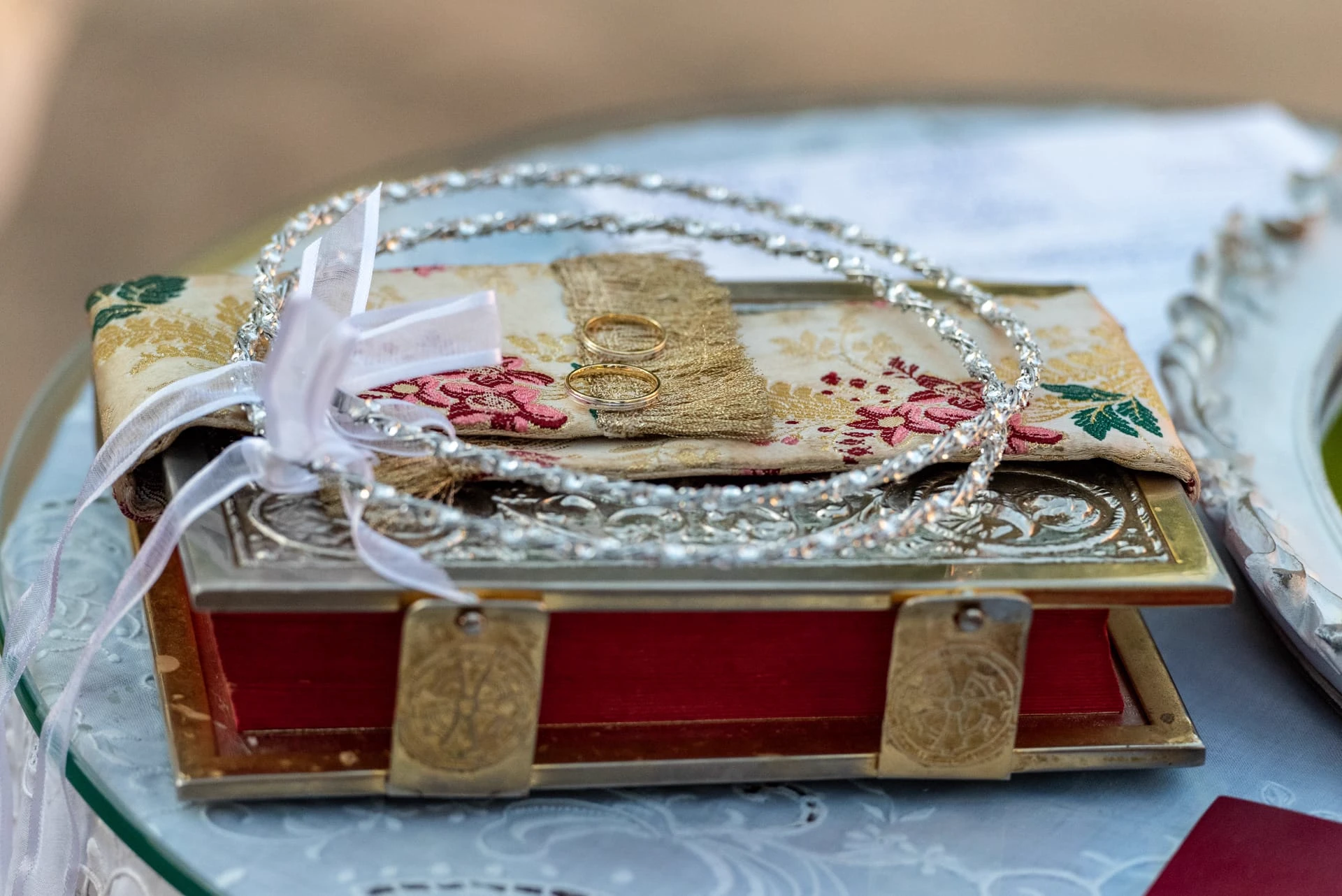
Moments such as the exchange of rings, the crowning with the stefana and the movement around the altar happen within a structure that is very different from a symbolic or civil ceremony.
For photography, this means the ceremony needs to be understood rather than treated as a sequence of poses.
Important moments can happen quickly, family members may become closely involved, and the atmosphere inside the church can shift from quiet concentration to intense emotion within seconds.
At the same time, the ceremony is only one part of the wider traditional wedding story.
Its meaning often becomes stronger because of what surrounds it — the preparations, the families, the village, the music and the celebration that follows.
A deeper guide to Orthodox weddings should treat the ceremony itself in more detail. Here, its role is simply to show how naturally it sits inside the wider structure of a traditional Cretan wedding.
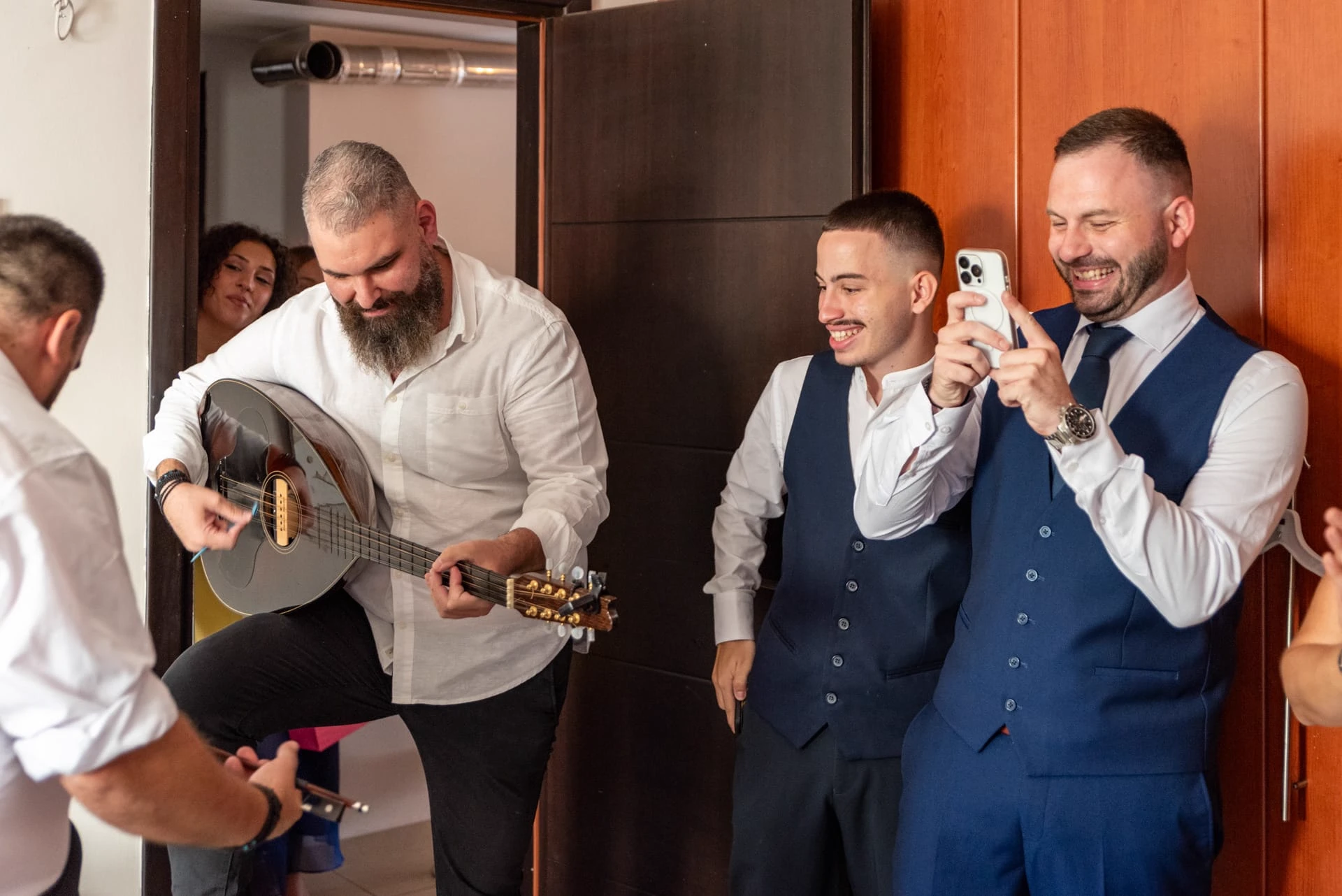
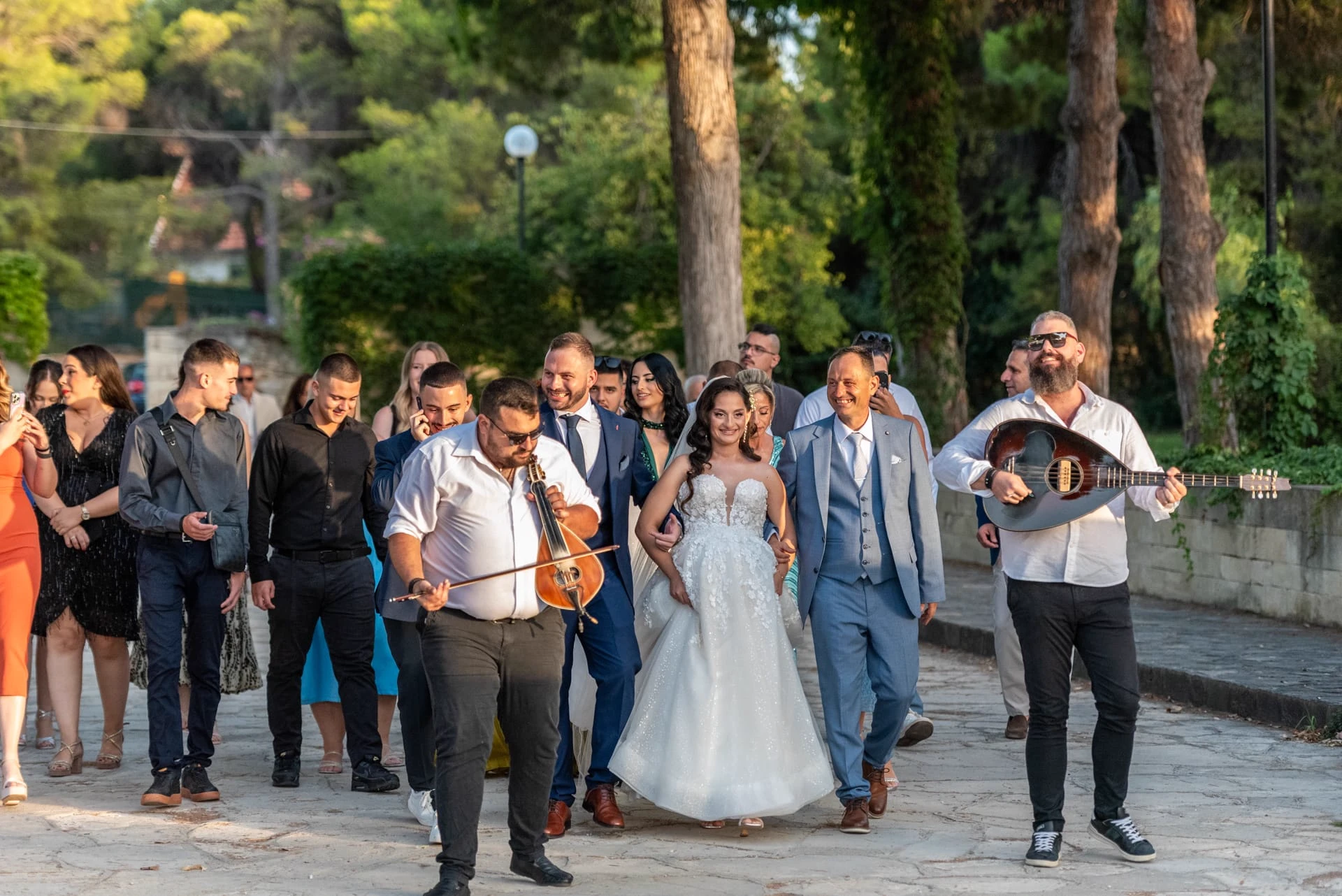
In many traditional Cretan weddings, music is woven into the day rather than added only for entertainment.
Live musicians can become part of the preparations, the gathering of the families, the movement between locations and, later, the reception itself.
That changes the atmosphere completely.
Music can mark a transition, bring people together, create anticipation and turn a formal moment into a shared celebration.
In some weddings, traditional instruments and songs carry a strong local identity.
In others, the role of the musicians is more fluid, moving between older traditions and the energy of the evening celebration.
From a photography perspective, these moments are especially important because they create movement and interaction.
People sing, react, dance, approach one another and respond naturally to the music.
The strongest photographs often come from those unscripted exchanges rather than from any planned moment.
This is one of the clearest ways a traditional Cretan wedding feels alive: the music is not simply heard in the background.
It actively shapes how the celebration unfolds.
Traditional Cretan weddings can include customs that carry meaning far beyond their visual appearance.
One of the clearest examples is Rizitika.
These songs are part of Cretan cultural tradition and, when they appear in a wedding, they are not simply another form of entertainment.
They can create a strong sense of continuity between generations, family and place.
The same is true of other traditions that may appear around the wedding day — from preparation rituals and music to the way families gather, welcome guests or participate in the celebration.
What matters is that these traditions are not identical in every wedding.
Some families preserve them strongly.
Others include only a few elements.
And some couples combine traditional customs with a more contemporary wedding structure.
That is why it would be misleading to describe a “traditional Cretan wedding” as one fixed formula.
The traditions have meaning because they belong to the people and the context of that particular celebration.
From a photography perspective, the most important thing is to recognise when a moment carries cultural or family significance and give it the attention it deserves without turning it into something staged.
The Wedding Knowledge Repository specifically preserves Rizitika, Cretan musicians, village celebration customs, family traditions, bridal and groom preparation, dancing and local food traditions as recurring areas of real wedding evidence.
Food and hospitality are central to the atmosphere of many traditional Cretan weddings.
The reception is not simply the part of the day where guests sit down to eat.
It is often where the celebration expands.
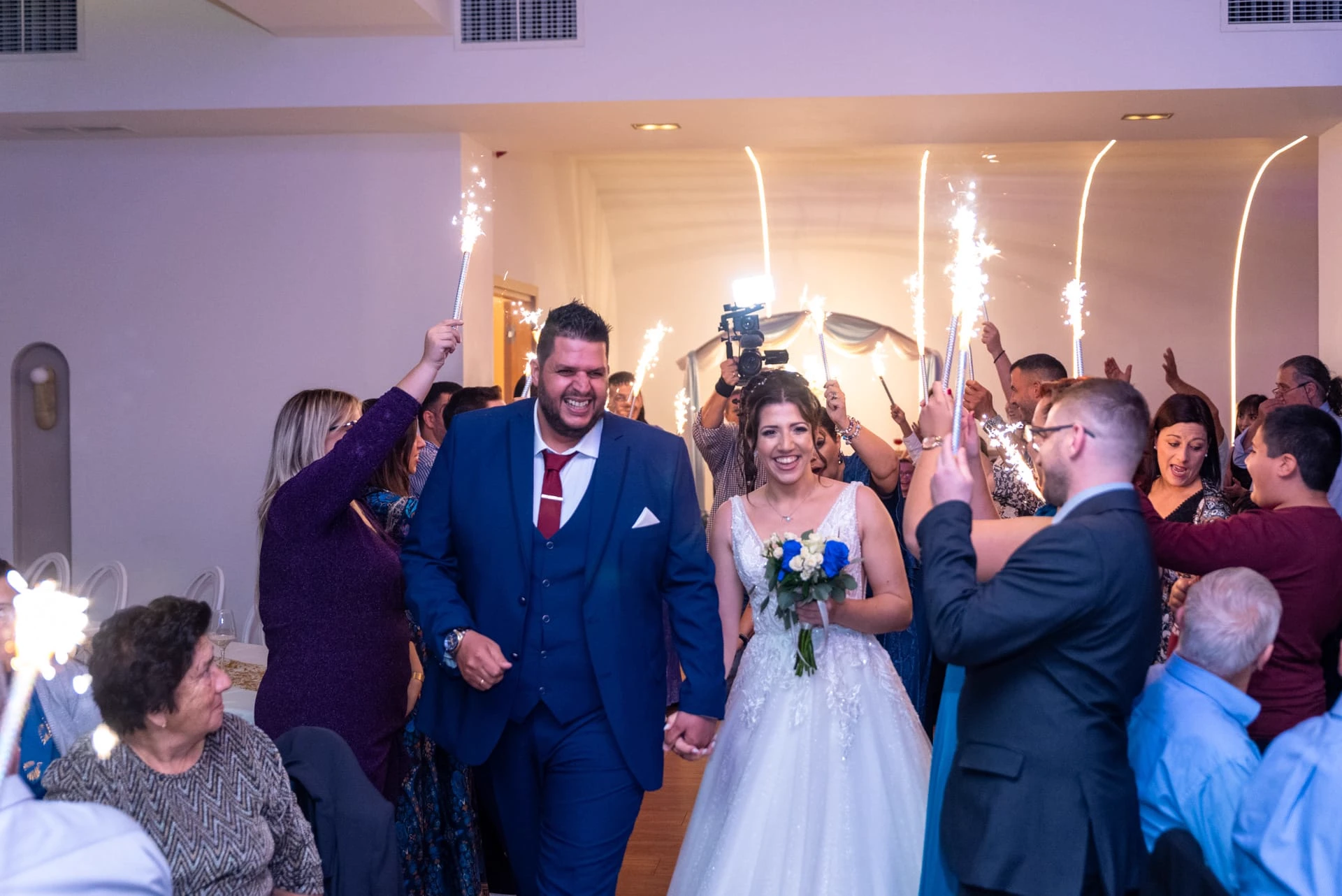
Long tables, repeated toasts, shared dishes, music, dancing and constant movement between family and friends can turn the reception into one of the most socially intense parts of the wedding day.
In Crete, hospitality is often expressed through abundance and participation.
Guests are not treated as an audience.
They become part of the celebration.
That means the reception can continue for hours, gradually shifting from food and conversation into music, dancing and a much more energetic atmosphere.
For photography, this part of the day is valuable because so much happens naturally.
There are conversations across tables, reactions during speeches, spontaneous embraces, children moving between guests, older relatives watching the dancing and friends pulling one another onto the dance floor.
The strongest images are often found in these unscripted transitions.
They help show that a traditional Cretan wedding is not defined only by ceremony or custom, but by the way people gather and celebrate together.
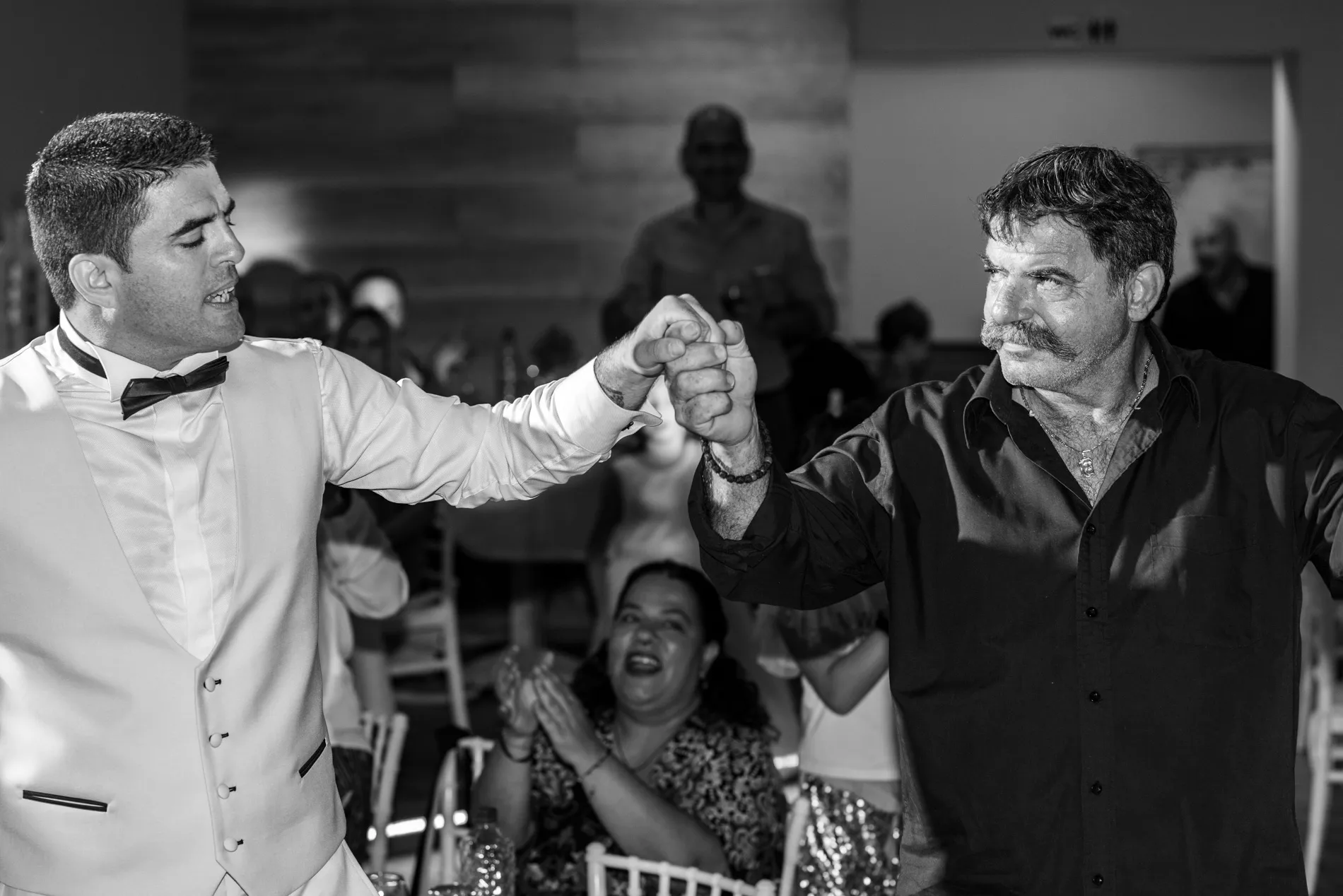
Dancing is often the point where a traditional Cretan wedding becomes fully communal.
The formal structure of the day begins to loosen.
Family members, friends and guests move closer together, traditional music becomes more physical, and the celebration shifts from observing the couple to participating with them.
In some weddings, traditional Cretan dances form an important part of the evening.
In others, they appear alongside more contemporary music and a more modern reception structure.
What matters is the interaction they create.
People join circles, encourage one another, bring different generations onto the dance floor and create moments that cannot really be planned in advance.
For photography, this part of the wedding requires a very different approach from portraits or formal family photographs.
The action is fast, people move unpredictably, and important reactions can happen anywhere around the dance floor.
Rather than trying to control the scene, the goal is to read the energy and stay close enough to preserve both the movement and the relationships inside it.
These photographs often become some of the strongest evidence of what the celebration actually felt like.
Traditional Cretan weddings are highly dynamic.
There are important formal moments, but much of what defines the day happens outside them.
Family interactions, musicians arriving, people gathering around the couple, reactions during the ceremony, spontaneous singing, dancing and long reception moments can all become part of the story.
That means the photography has to stay responsive.
Many of the strongest moments cannot be scheduled or repeated.
They happen quickly and often at the edges of the main event.
A documentary approach works especially well because it allows the wedding to unfold naturally while still paying close attention to the people, traditions and relationships that give the day its character.
This also means understanding when not to interfere.
The goal is not to turn a traditional wedding into a controlled production.
It is to preserve the rhythm that already exists.
For us, that often means moving between the obvious moments and the quieter ones — the ceremony and the reactions around it, the dance floor and the people watching from the side, the couple and the generations of family gathered around them.
That is what allows the final story to feel like the wedding itself rather than only a collection of formal photographs.
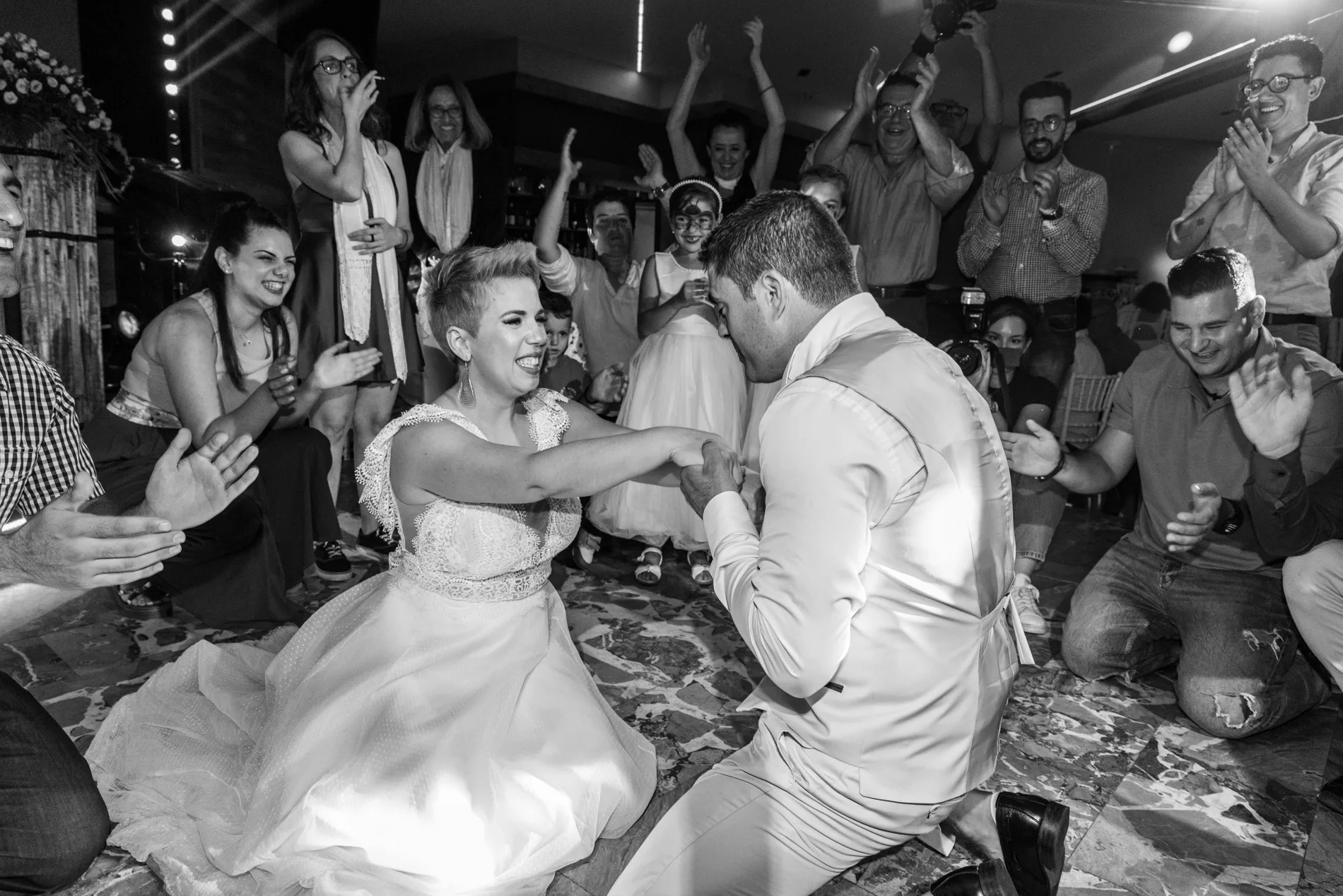
There is no single formula that defines every traditional Cretan wedding.
Some weddings preserve a strong connection to village customs, live Cretan music and family traditions.
Others combine only a few traditional elements with a more contemporary celebration.
The ceremony may be Orthodox, but the reception can feel modern.
There may be Rizitika, but not at every wedding.
There may be Cretan musicians, but the way they are involved can vary greatly from one family to another.
That variation matters.
Tradition is strongest when it reflects the couple, the family and the place rather than being added simply because it is expected.
From a photography perspective, this is important too.
We cannot approach every traditional wedding with the assumption that the same moments will happen in the same way.
The role of the photographer is to understand what is meaningful in that specific wedding and respond to it as it unfolds.
That is what keeps the final story honest.
The best way to understand a traditional Cretan wedding is through real celebrations. These weddings show how family, local culture, Orthodox tradition, music and village life can come together in very different ways.
Vafes & Kontaros, Crete
A village wedding shaped by family, Orthodox tradition, music and the atmosphere of Apokoronas.
View Wedding Story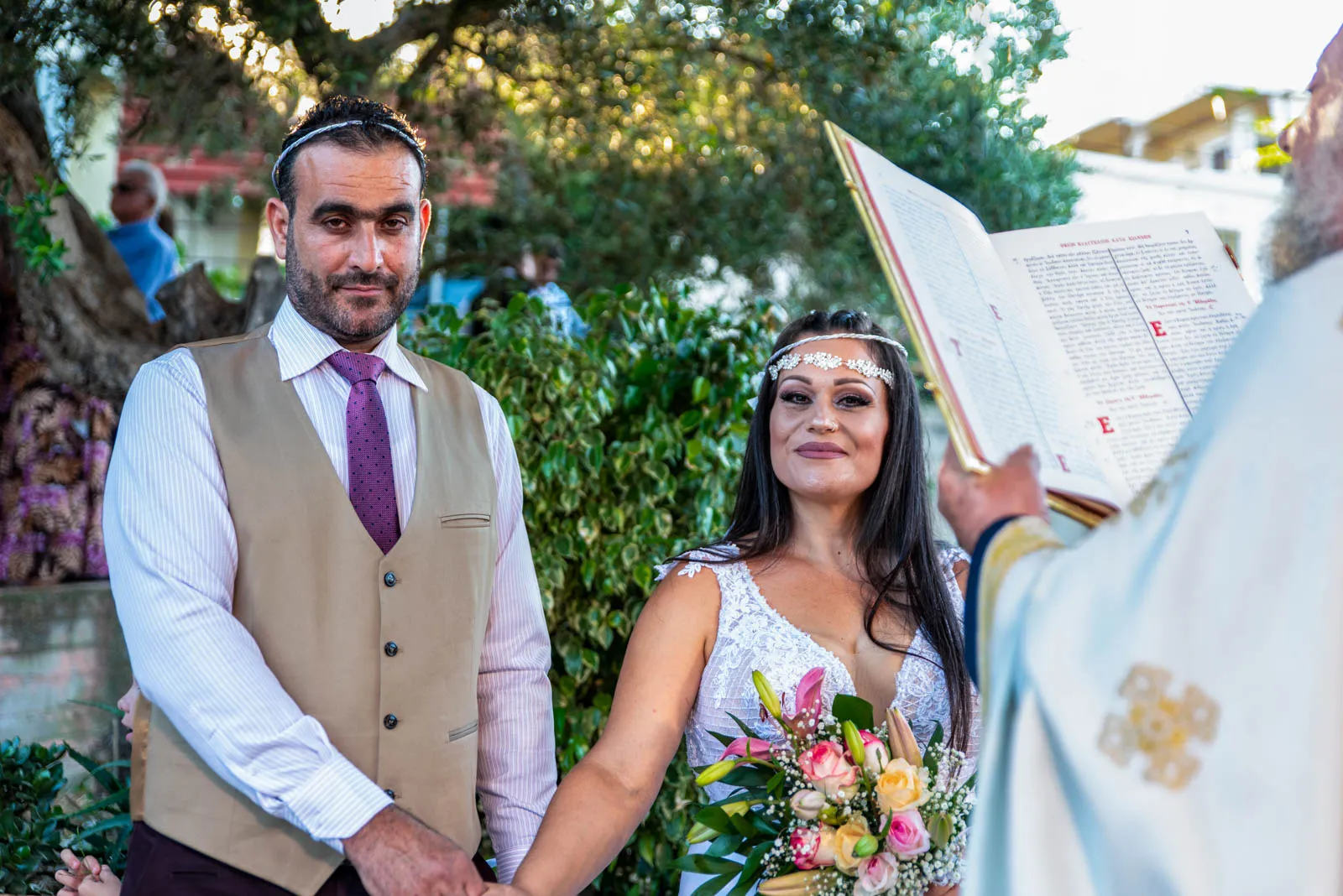
Chryssavgi, Crete
A traditional Cretan wedding with strong family participation, Orthodox ceremony and a distinctly local celebration.
View Wedding StoryA traditional Cretan wedding and a destination wedding in Crete are not the same thing.
A traditional Cretan wedding is usually rooted in local family history, community, Orthodox ceremony, village life and customs that belong naturally to the people involved.
A destination wedding, by contrast, is often created by a couple travelling to Crete specifically for the celebration.
International couples may still choose to include elements inspired by local culture — for example live Cretan music, local food, an Orthodox ceremony where appropriate, or a reception with stronger regional character.
But that does not automatically make the wedding traditional in the same sense.
The distinction matters because tradition is not simply a styling choice.
It comes from context, family, place and continuity.
For couples travelling to Crete, the strongest approach is usually to include local elements thoughtfully rather than trying to reproduce a version of Cretan tradition that does not belong naturally to their story.
A traditional Cretan wedding is usually shaped by more than one custom.
Its identity often comes from the combination of family involvement, Orthodox ceremony, local music, village or community connection, hospitality and traditions that carry meaning for the people involved.
Not every wedding includes the same elements, and there is no single fixed formula.
Yes.
In the traditional Cretan wedding context, the Greek Orthodox ceremony is one of the central elements of the day.
It includes rituals such as the exchange of rings, the stefana and the ceremonial procession around the table. Around that religious structure, individual families may preserve additional local customs and ways of celebrating.
Yes, live Cretan music is strongly associated with traditional wedding celebrations, particularly in village and family-based weddings.
Musicians may be involved not only during the reception but also during other parts of the celebration, depending on local and family custom.
The lyra and laouto are among the instruments strongly associated with Cretan musical tradition, although musical practices vary across the island.
Rizitika are a traditional form of Cretan vocal music associated particularly with western Crete and the villages around the White Mountains.
Historically, they have had an important role in weddings and other communal celebrations.
Different Rizitika repertoires were traditionally connected with different parts of wedding rituals, including songs performed at the table and songs associated with processions and other stages of the wedding.
They should therefore not be described simply as generic “wedding songs”, and they are not necessarily part of every modern Cretan wedding.
They often can, but there is no fixed duration.
Traditional village weddings in Crete are known for large communal receptions, extended meals, live music and dancing that can continue late into the night.
However, the size and duration of a modern wedding depend on the couple, family, location and the traditions being followed.
So it is safer to describe long celebrations as a common characteristic rather than a rule for every Cretan wedding.
Yes, but it is more accurate to say that international couples can incorporate elements of Cretan culture and tradition into a destination wedding.
For example, they may choose local musicians, Cretan food, regional music or other culturally appropriate details.
That does not automatically turn the celebration into a traditional Cretan wedding in the same sense as a local family wedding rooted in inherited customs and community.
This distinction is important because tradition is cultural context, not simply styling.
No.
Cretan wedding customs and musical traditions can vary by region, village and family.
For example, Rizitika are particularly associated with western Crete, while Cretan musical styles themselves have historically shown regional variation across the island.
The safest way to describe a traditional Cretan wedding is therefore as a living cultural tradition with local variations, rather than one standard format followed everywhere in Crete.
If you are planning a wedding in Crete and want the day documented naturally, the first step is simply to share what you already know.
Your date, locations, ceremony type and the general structure of the celebration are enough to begin.
From there, we can help you understand what photography or photography + film coverage fits the day, without forcing the wedding into a rigid formula.
Prefer WhatsApp? +30 694 880 4256 • panagiotis@patsiotis.photography