An Orthodox wedding in Crete has a very particular rhythm.
The ceremony is structured, symbolic and continuous, but it is also deeply connected to the people surrounding the couple.
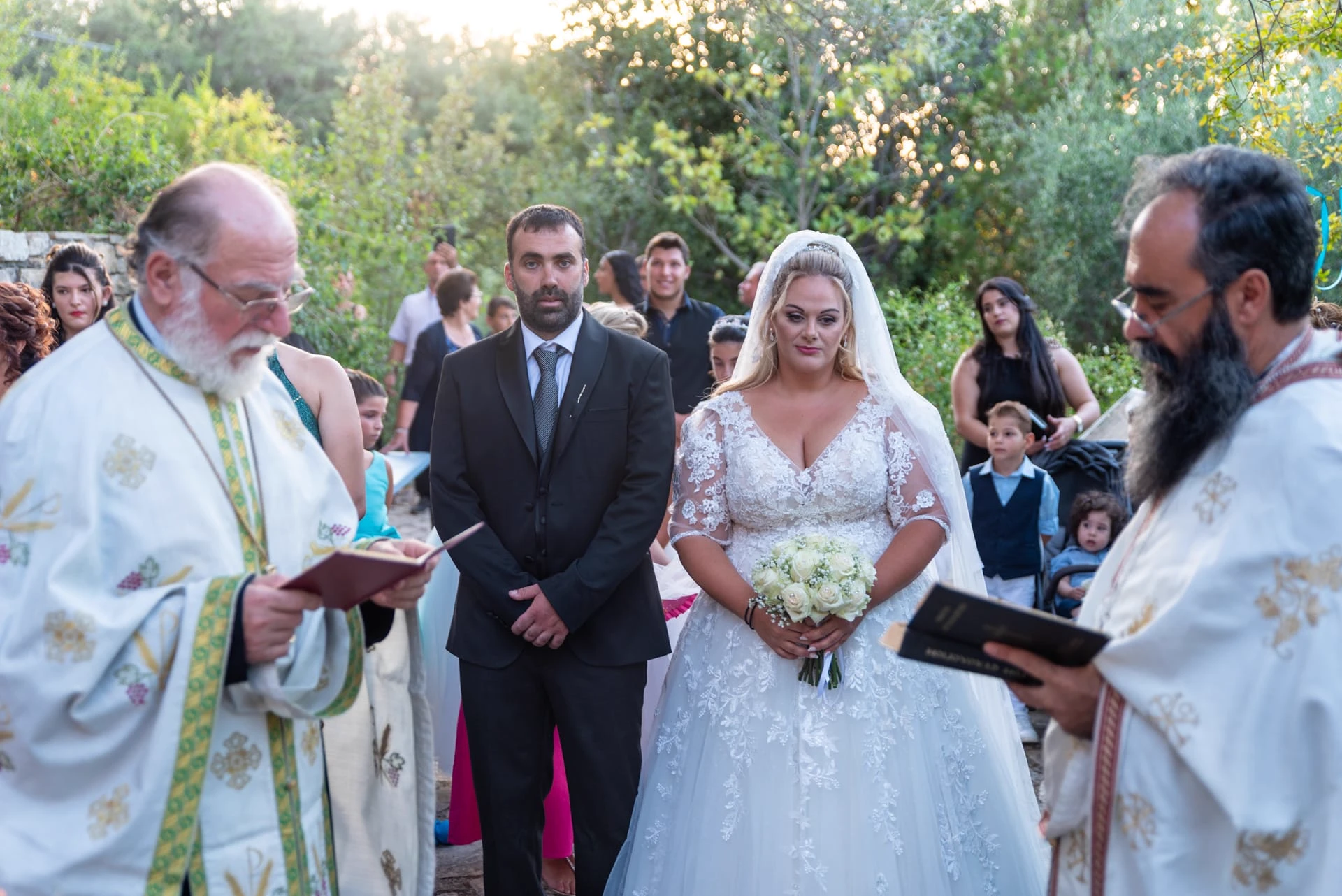
Parents, relatives, the koumbaros and close friends are often physically close to the ceremony, while the priest moves through a sequence of rituals that does not pause for photographs.
That changes the way the day is experienced.
There is less separation between “the ceremony” and “the family”. Reactions happen at the same time as the formal parts of the service, and some of the most meaningful moments are not necessarily the most obvious ones.
From a photography perspective, this is one of the reasons experience matters.
The important moments are not created for the camera.
They unfold as part of the service itself, often quickly, in spaces where movement is limited and where interrupting the ceremony would be inappropriate.
Through the Orthodox weddings we have photographed across Crete, we have learned that documenting the day well depends on understanding both the sequence of the service and the people around it.
This guide looks at what the ceremony is actually like, which moments matter most, and how the structure of an Orthodox wedding affects the way it is photographed.
An Orthodox wedding ceremony is not built around isolated moments.
It follows a continuous sequence in which the exchange of rings, the crowning with the stefana, the common cup, the procession and the blessings form part of one uninterrupted service.
That rhythm matters photographically.
Some moments are quiet and almost still. Others happen quickly, with the priest, the couple, the koumbaros and close family all becoming part of the same scene.
There is very little room to interrupt or reposition people.
The ceremony has to be followed as it unfolds.
From our experience photographing Orthodox weddings in Crete, knowing the structure of the service makes it easier to anticipate where attention will shift next — from the rings, to the crowns, to the couple, to the people standing around them.
That does not mean trying to control the ceremony.
It means understanding it well enough to stay unobtrusive while being ready for the moments that cannot be repeated.
The strongest photographs often come from that balance: respecting the flow of the service while recognising when the ritual, movement and human reactions come together in the same frame.
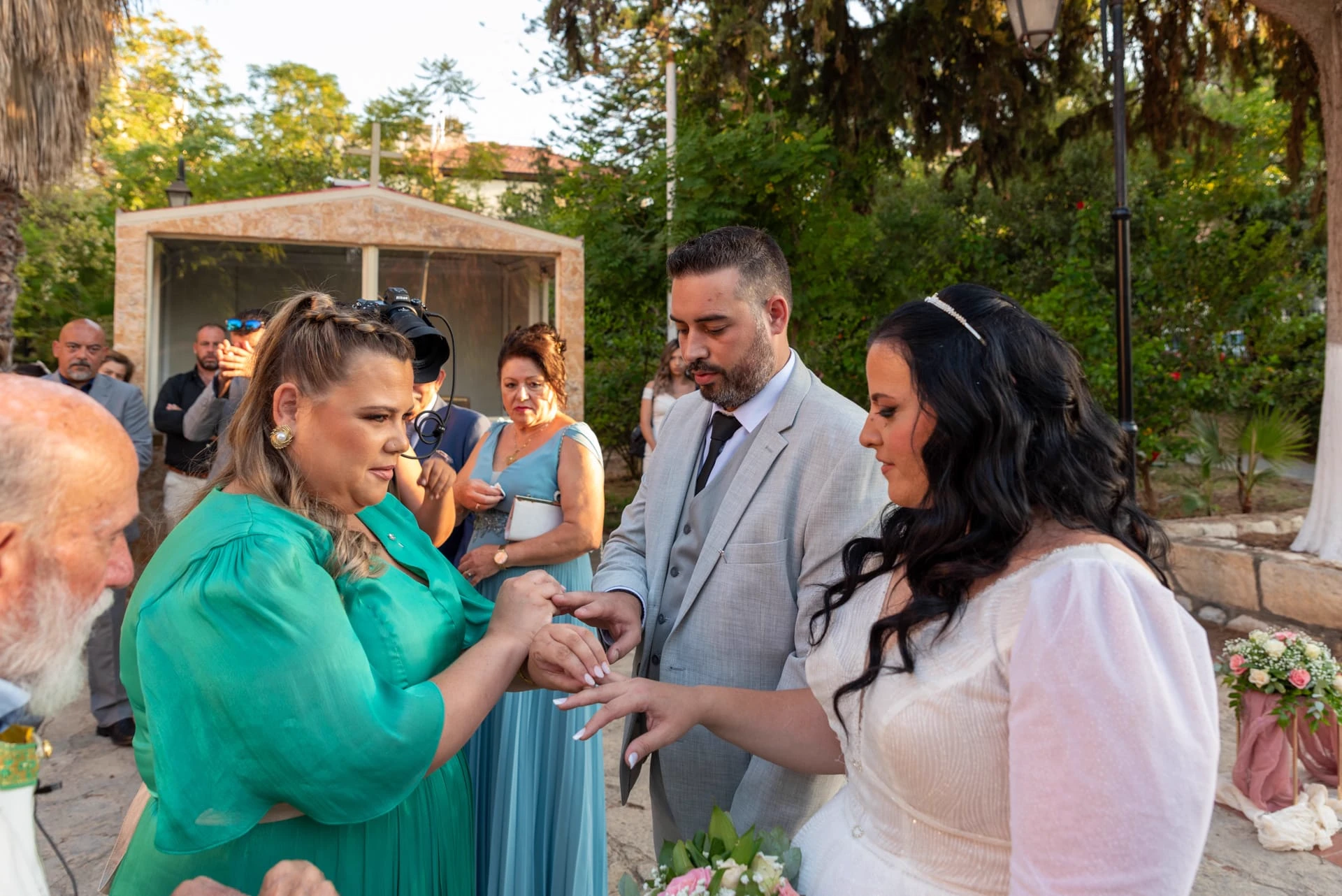
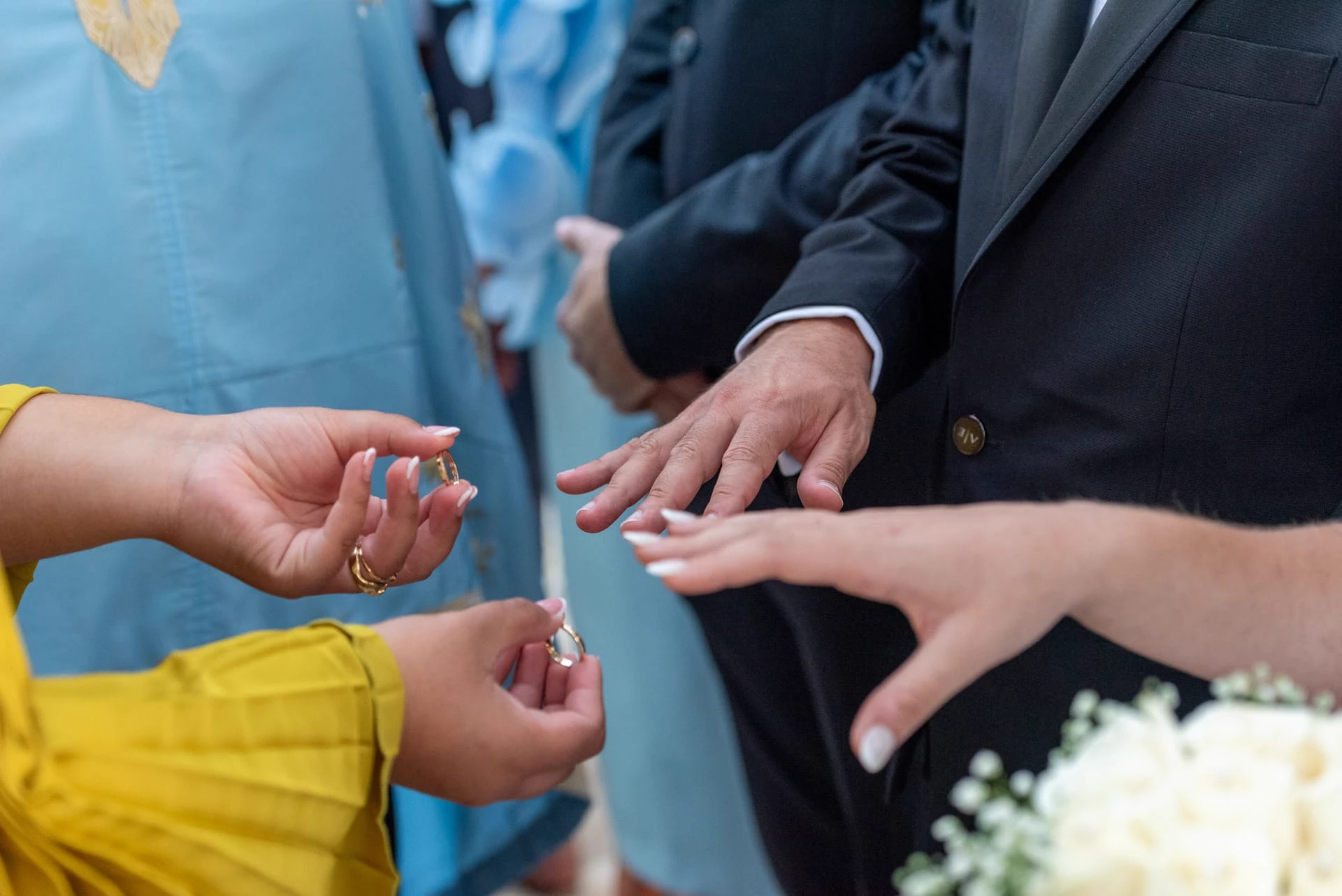
The exchange of rings takes place during the Service of Betrothal, one of the opening parts of the Orthodox wedding ceremony.
The priest blesses the rings before they are placed on the couple’s hands, and the koumbaros traditionally takes an active role in the exchange.
Within the wider structure of wedding traditions in Crete, this is one of the first moments where the symbolic and family roles of the ceremony become clearly visible.
Photographically, the difficulty is that several things can happen almost at once.
The rings, the priest’s hands, the couple’s reactions and the movement of the koumbaros can all become important within a very small area.
There is rarely a reason to move close enough to interrupt the service.
Instead, the strongest approach is to anticipate the sequence, work from a respectful position and preserve both the ritual itself and the reactions around it.
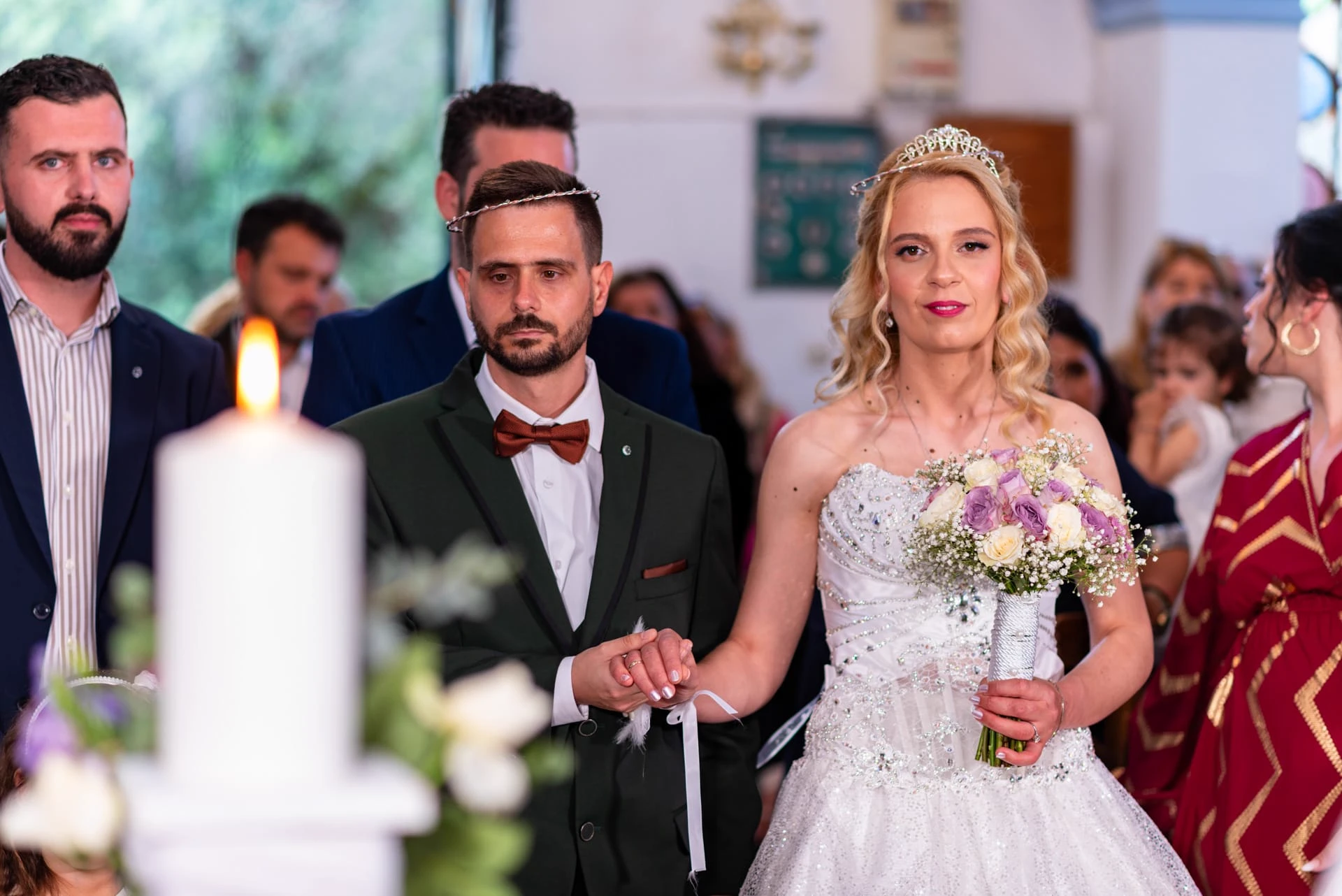
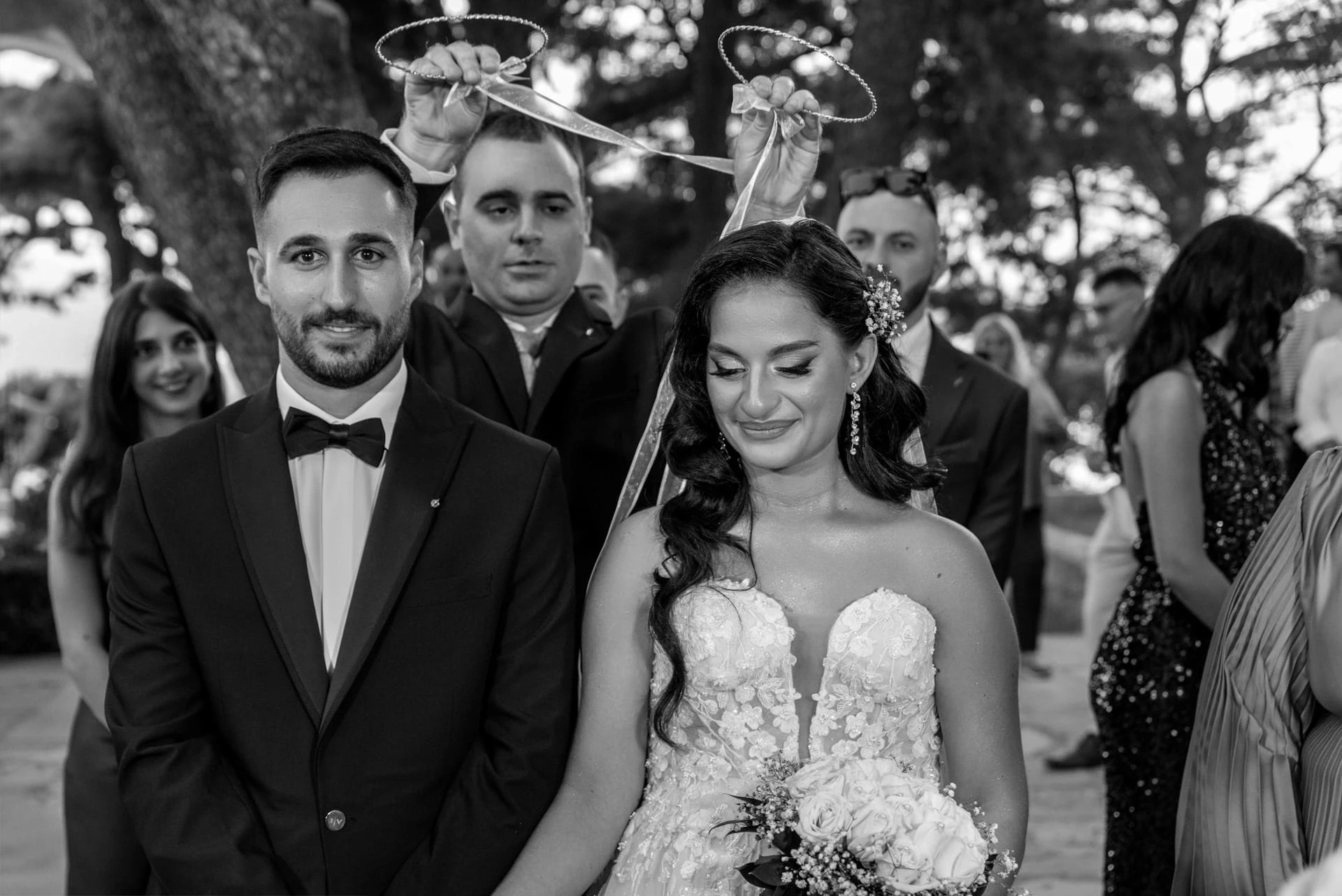
The crowning is one of the central moments of an Orthodox wedding ceremony.
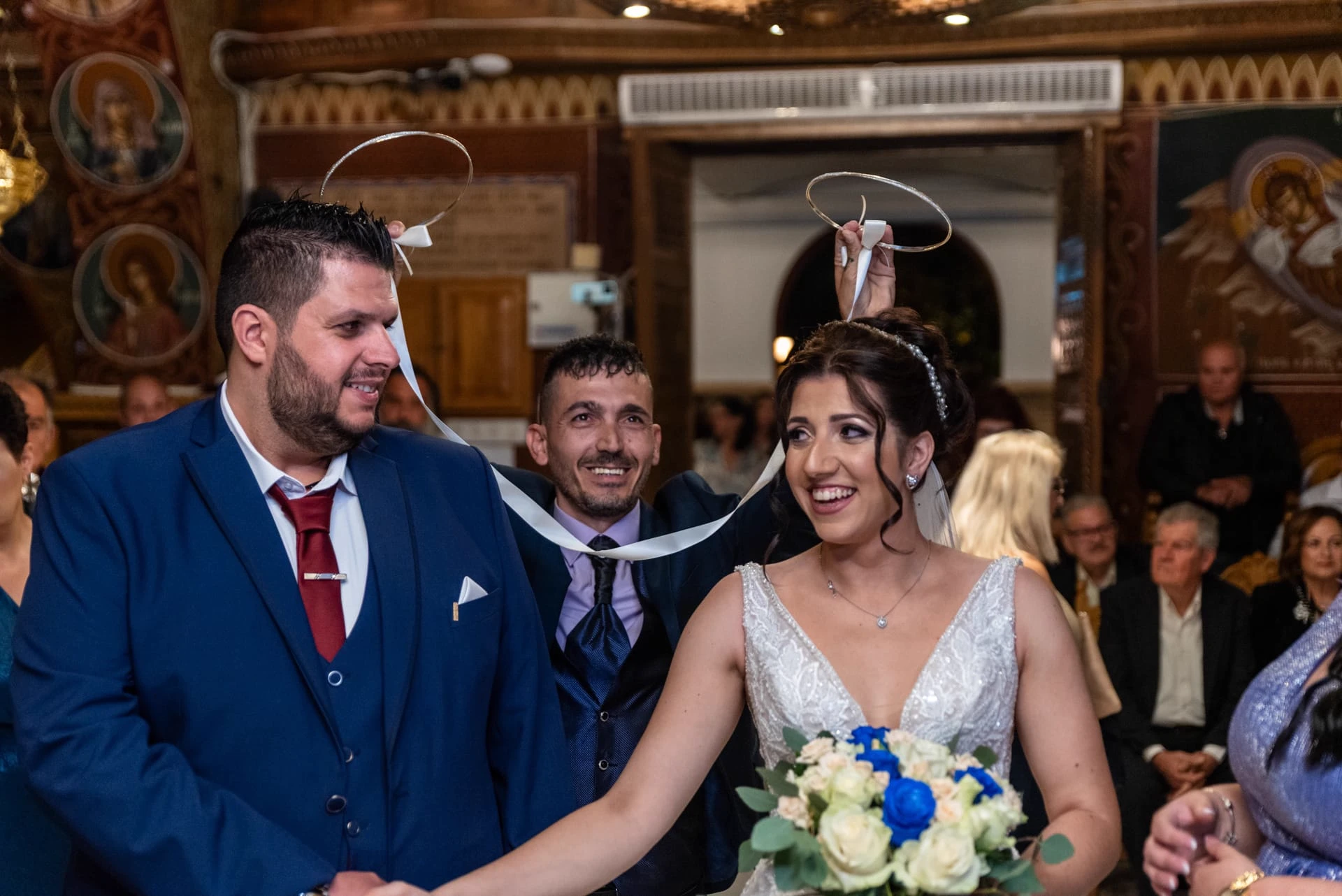
The priest places the stefana, the wedding crowns, on the couple as part of the Service of Crowning. The koumbaros is also involved in the ritual, reinforcing the close relationship between the couple, the ceremony and the people standing beside them.
We explain the symbolism of the stefana and the crowning ceremony in more detail in our guide to wedding traditions in Crete. Here, the important point is how quickly the moment unfolds and how much is happening within a very small space.
From a photography perspective, this is a point where anticipation matters.
The crowns, the priest’s gestures, the koumbaros, the couple’s expressions and the reactions of close family can all become significant at the same time.
Because the ceremony cannot be interrupted or repeated, the goal is not simply to photograph the crowns themselves. It is to preserve the full moment around them — the ritual, the movement and the human response.
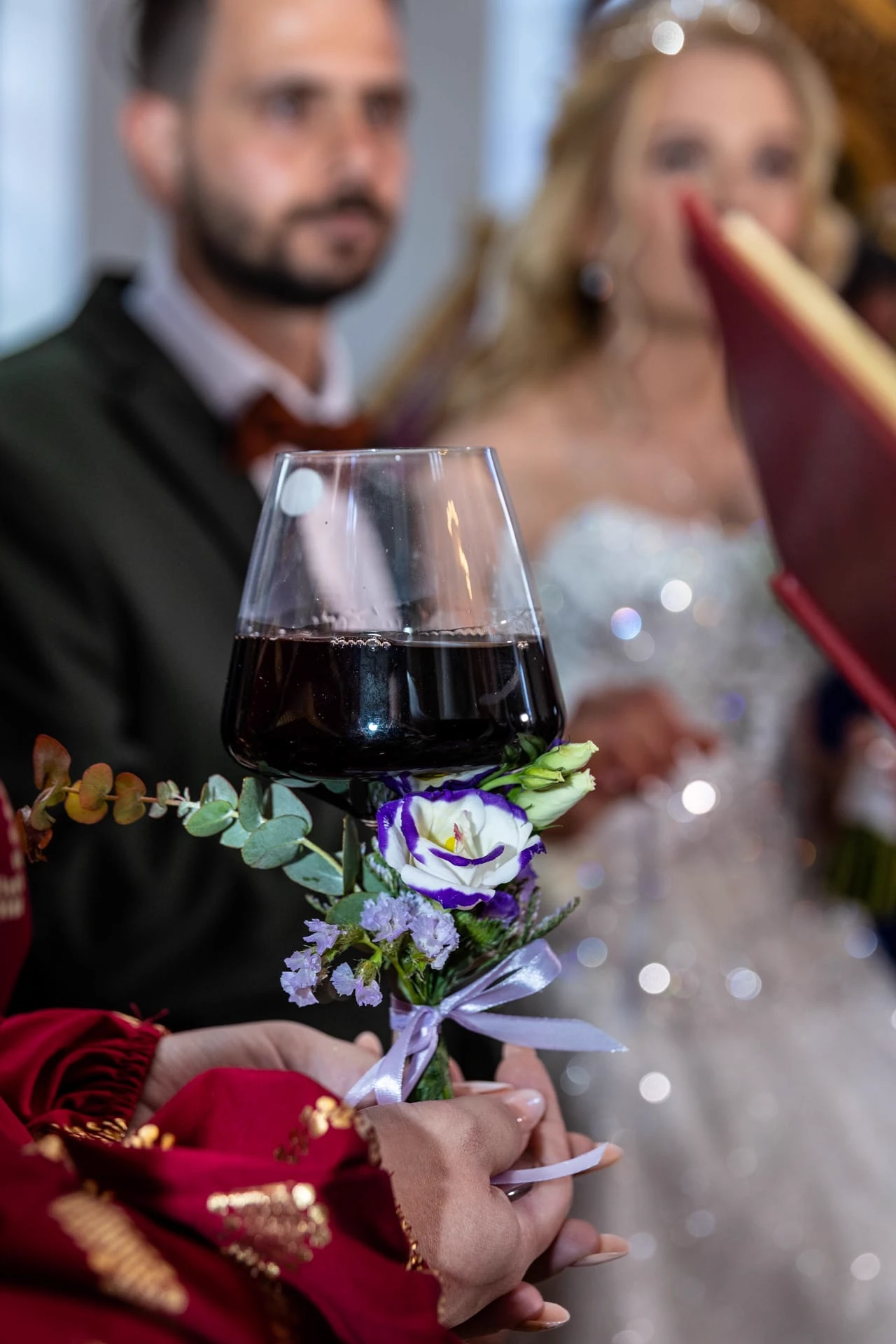
The common cup is another distinctive part of the Orthodox wedding ceremony.
After the crowning, the couple drinks from the same cup, symbolising the life they will share together.
It is a brief moment, but visually it can carry several layers at once: the priest guiding the ritual, the couple responding to the gesture, and the people around them watching closely.
From a photography perspective, the challenge is similar to the ring exchange and crowning.
The action itself is small, but the meaning of the moment is wider than the object in the couple’s hands.
A close photograph can preserve the gesture, but a slightly wider frame often tells more of the story by including the priest, the couple’s expressions and the surrounding ceremony.
This is why photographing an Orthodox wedding well is not simply about documenting individual traditions. It is about understanding how each ritual fits into the flow of the service and how the people around the couple respond to it.
The Dance of Isaiah is one of the most recognisable moments of the Orthodox wedding ceremony.
After the crowning and the common cup, the priest leads the couple around the ceremonial table in a circular procession, traditionally accompanied by the koumbaros and the wedding crowns.
Unlike the quieter parts of the service, this moment introduces movement into the ceremony.
For photography, that changes everything.
The couple is no longer standing in one fixed position. The priest, the koumbaros, the crowns and the surrounding guests all shift within the space, and the strongest angle can change within seconds.
This is another point where familiarity with the sequence matters.
Rather than reacting after the procession has already begun, the photographer needs to anticipate the movement, understand the available space and choose a position that allows the procession to unfold naturally without becoming part of it.
The goal is not only to document the circular movement itself.
It is to preserve the interaction between ritual and emotion — the couple moving together, the people closest to them watching, and the sense that the ceremony has reached one of its most dynamic moments.
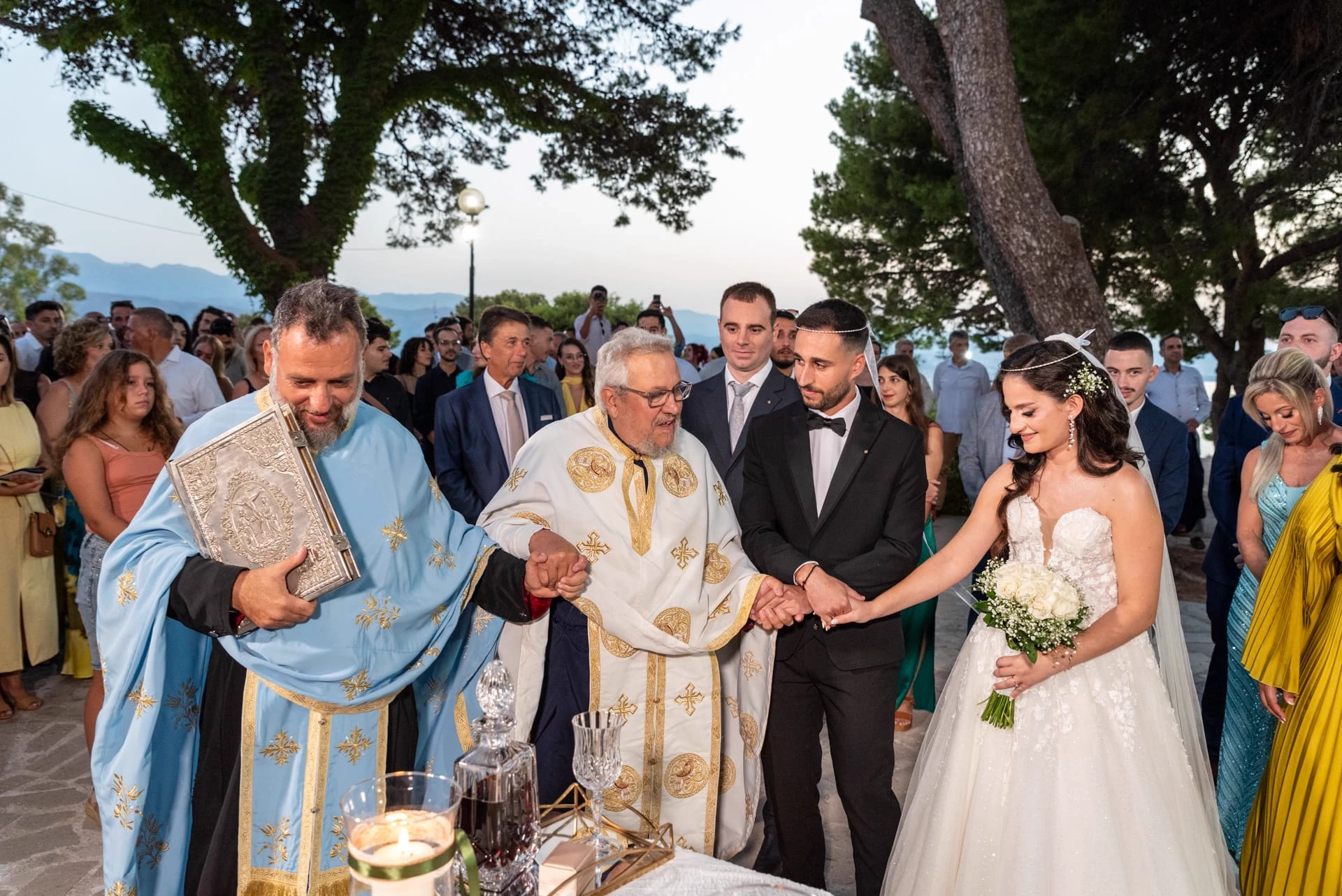
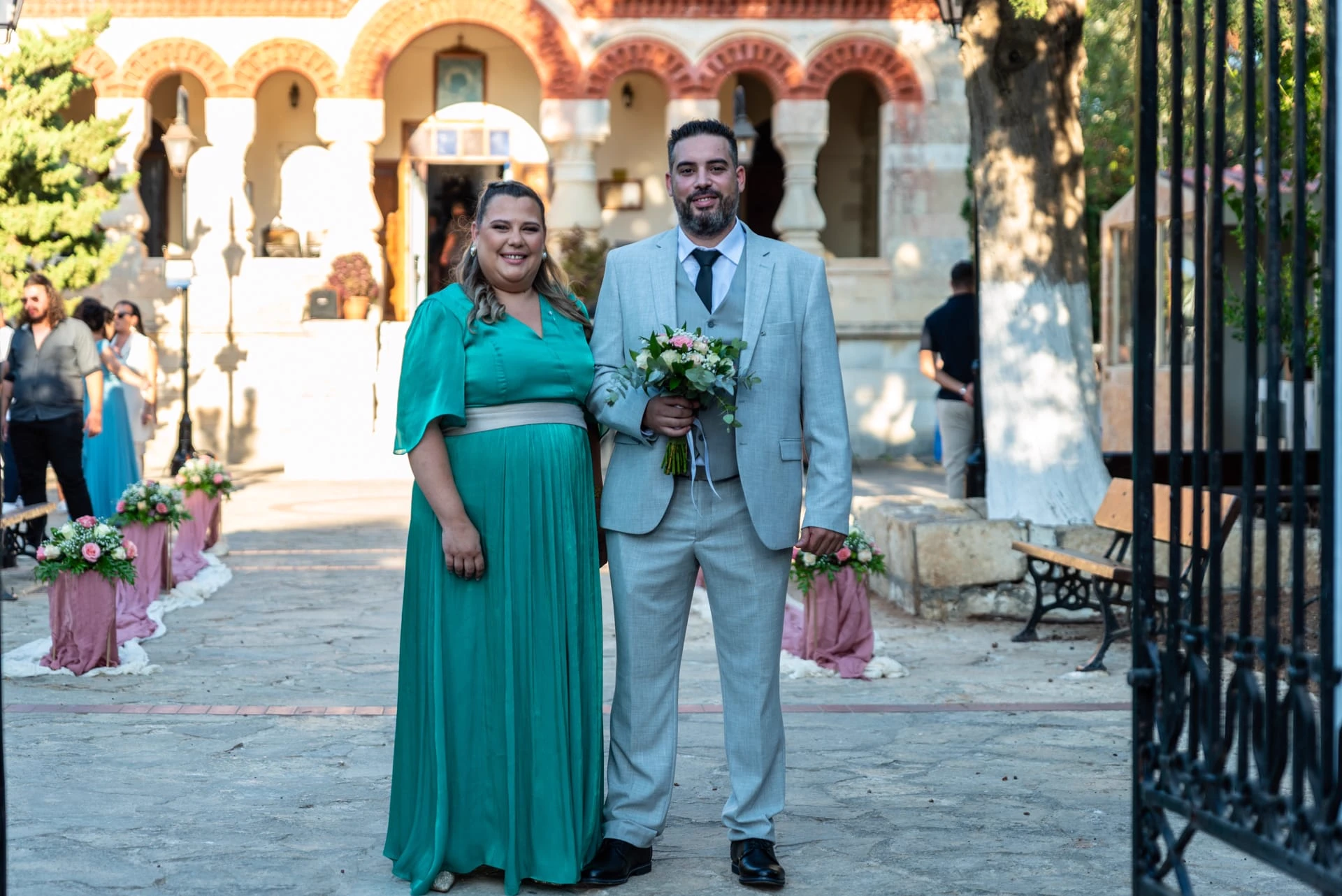
One of the defining characteristics of many Orthodox weddings in Crete is how close family and sponsors remain to the couple throughout the ceremony.
Parents, the koumbaros, close relatives and friends are often only a few steps away from the central ritual.
That proximity creates a very different documentary environment.
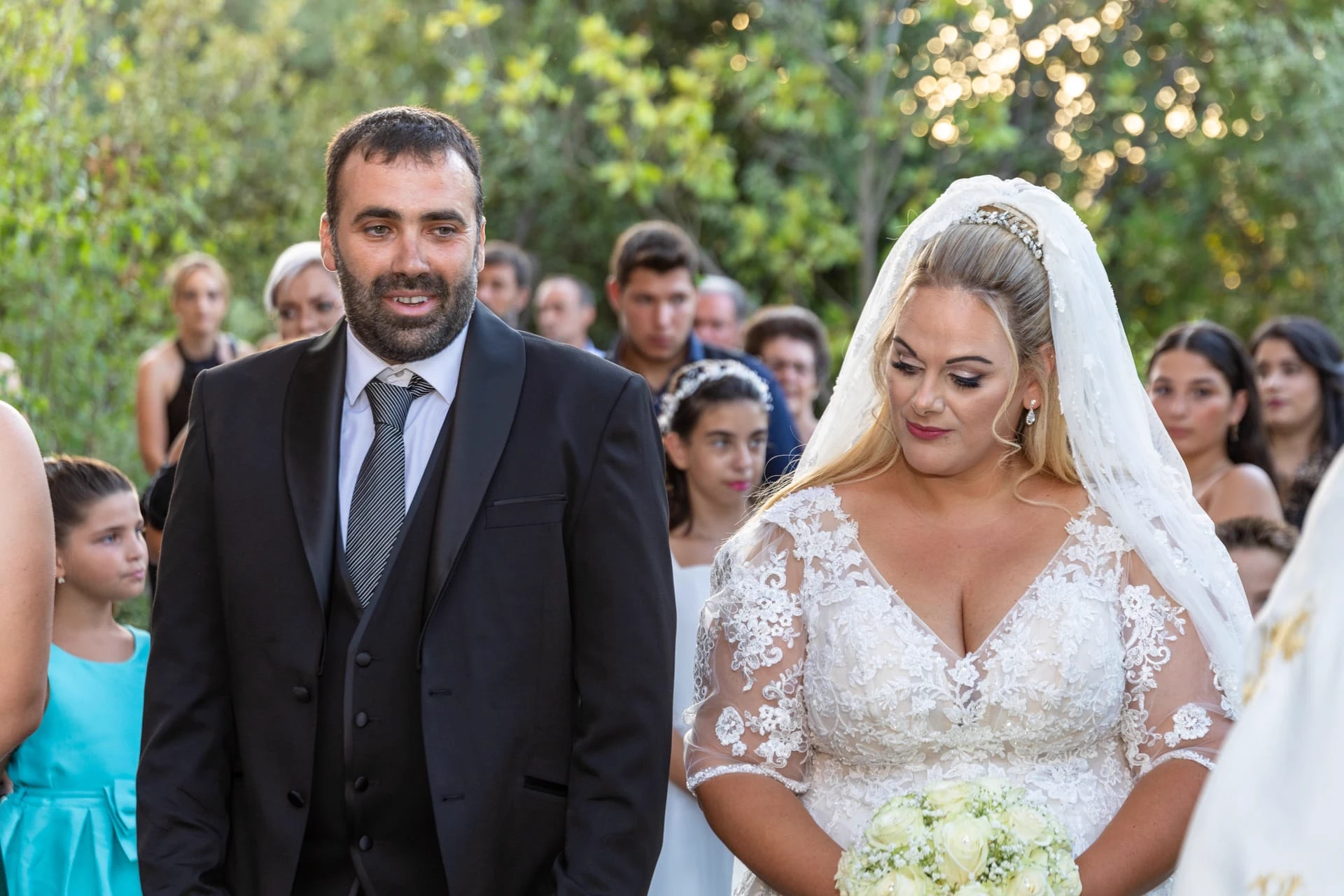
The ceremony is not happening in isolation while guests observe from a distance. Reactions, small gestures and emotional exchanges often happen at the same time as the formal parts of the service.
For photography, this means that attention cannot stay only on the priest and the couple.
A parent watching the crowning, a relative reacting during the procession, or a quiet exchange between people standing nearby may become just as important to the story as the ritual itself.
This is also where the connection between an Orthodox ceremony and traditional Cretan weddings becomes especially visible: family presence is not background detail, but often part of the emotional structure of the day.
The challenge is to preserve those reactions without losing the ceremony itself.
The strongest coverage comes from reading both layers at once — the formal sequence in front of the couple and the human response happening around it.
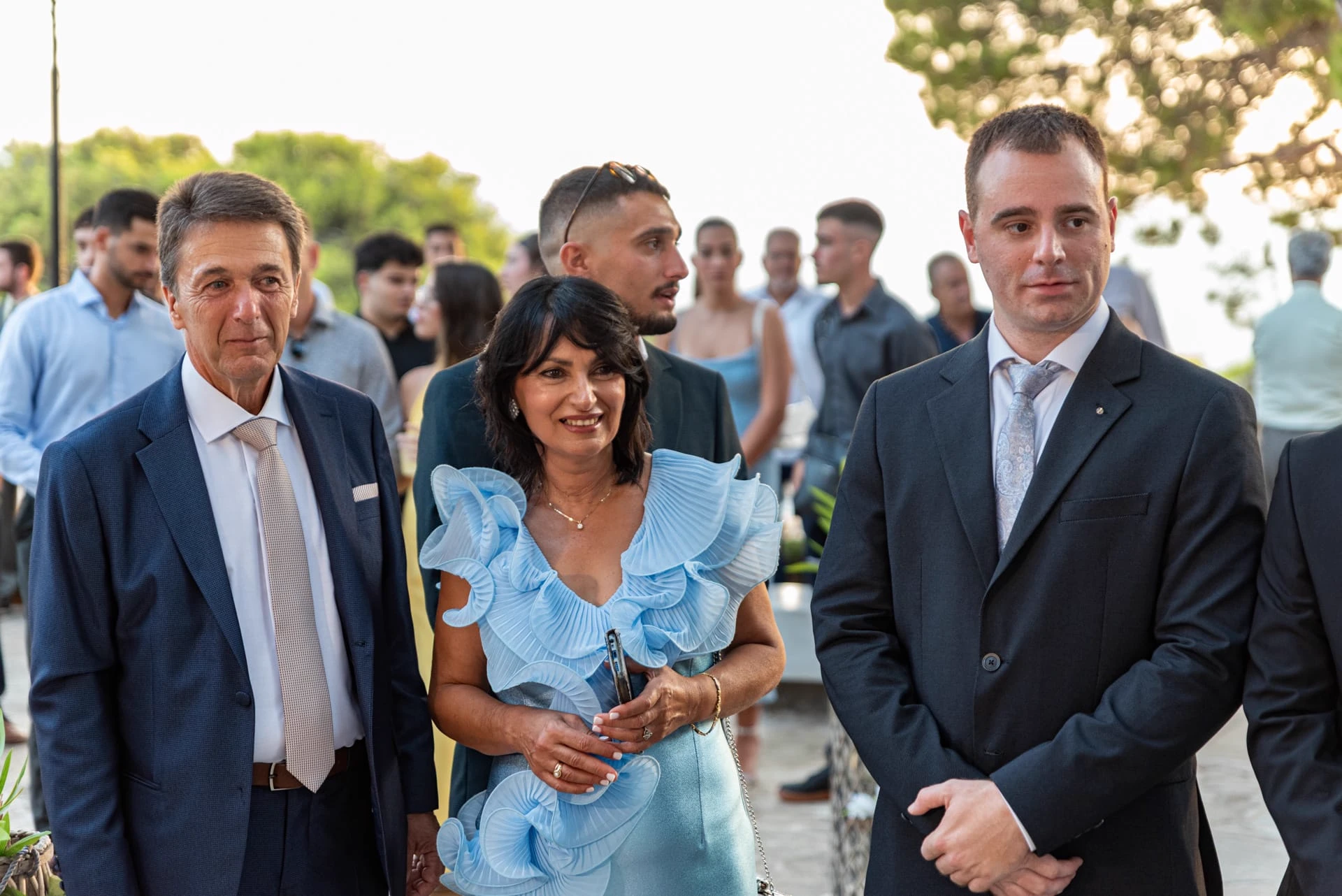
No two Orthodox wedding ceremonies in Crete are photographed in exactly the same way.
The church itself changes the working conditions.
Some interiors are compact, with the couple, priest, koumbaros and family standing very close together. Others allow more distance and more freedom to work with wider compositions. Light can also vary significantly, especially in older churches where the ceremony may take place in a relatively dark interior while the entrance remains much brighter.
That affects both positioning and timing.
Moving constantly is rarely the best solution. In a smaller church, excessive movement can become distracting very quickly, while in a larger space it may be possible to change position more discreetly.
The photographer therefore has to read the space before the key moments begin.
Where can the couple be seen clearly? Which positions will remain available once family gathers around them? Where will the priest stand during the crowning? How much movement is possible without crossing into the ceremony?
This is one of the practical reasons why real experience with different Orthodox churches matters.
The aim is not to impose a photographic setup on the ceremony, but to adapt to the church, the available light and the way the service unfolds inside that particular space.
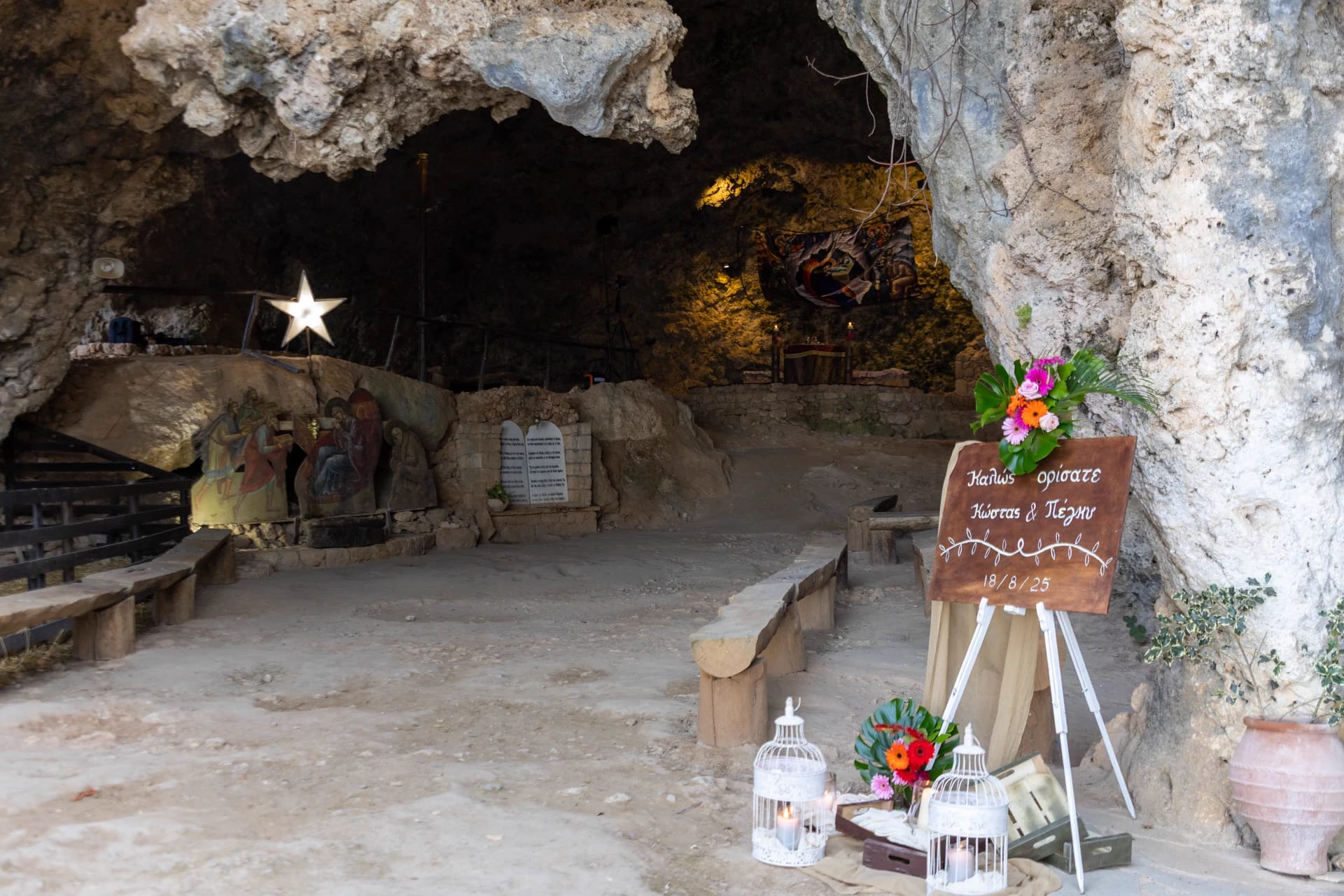
One of the strengths of photographing Orthodox weddings repeatedly is seeing how the same ceremony changes from place to place.
The structure of the service remains recognisable, but the atmosphere can feel very different depending on the church, the surrounding landscape, the size of the congregation and the way the family participates.
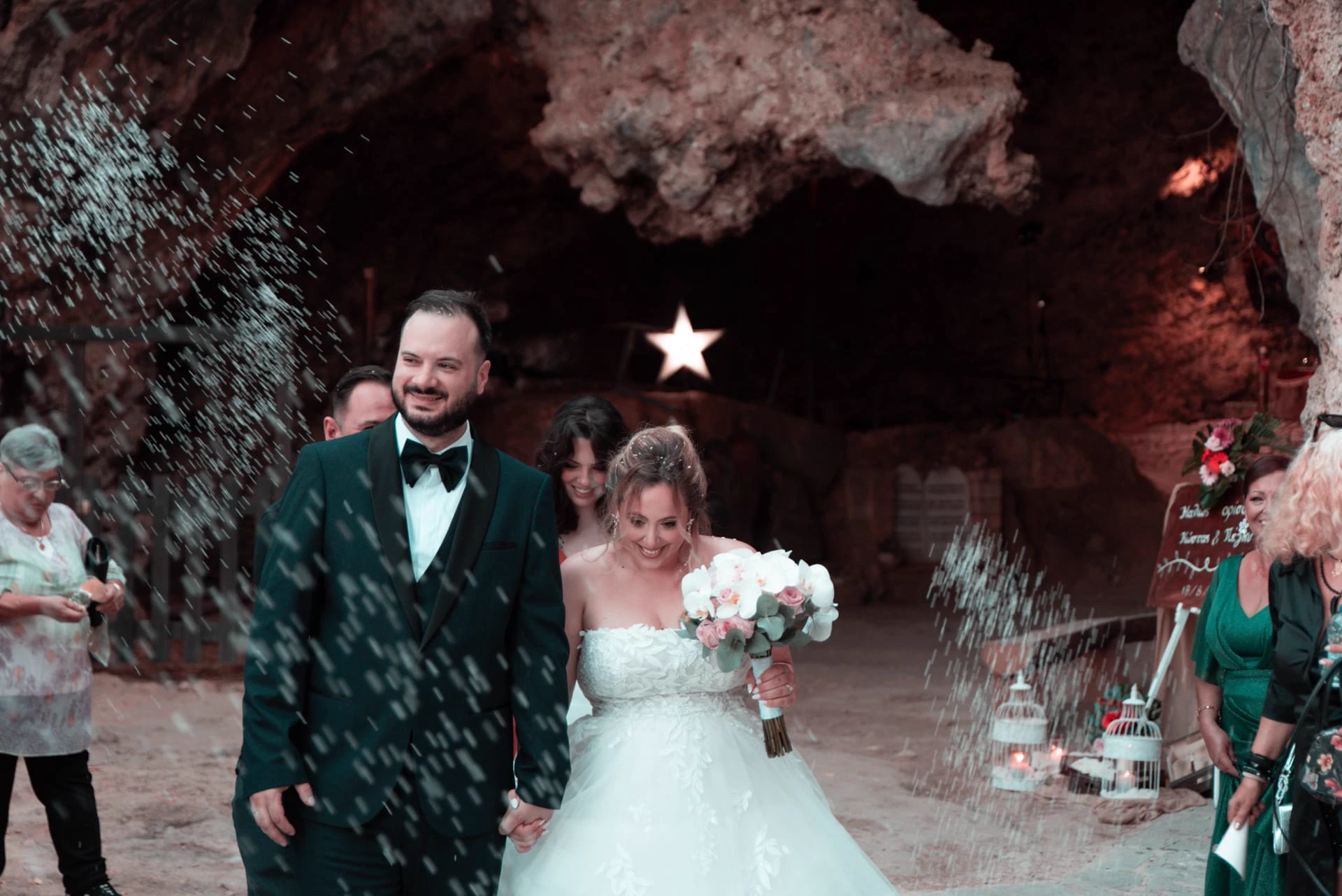
Our current wedding archive includes Orthodox ceremonies at several different churches and areas across Crete, including Profitis Ilias in Akrotiri, Saint John the Hermit Cave in Marathokefala, Panagia in Kounoupidiana, Agia Magdalini in Halepa, Holy Asomatoi in Vafes and Timios Stavros in Kakodiki.
That variety matters because it turns general familiarity with the Orthodox ceremony into practical experience across very different spaces and wedding environments.
A ceremony in a compact village church does not create the same photographic conditions as one in a larger church or a distinctive historic setting.
The underlying ritual may be familiar, but the way it is documented has to adapt every time.
For couples, this is also useful context when looking through real wedding stories. The photographs do not only show different styles of weddings; they show how Orthodox ceremonies actually unfold in different parts of Crete.
For couples who want to see how these ceremonies unfold in real weddings, explore Maria & Michalis’ Orthodox wedding at Panagia Church in Kounoupidiana, Ioanna & Giannis’ outdoor Orthodox ceremony at Agia Magdalini in Halepa, and Anna & Aris’ village wedding at the Church of the Holy Asomatoi in Vafes.
One of the easiest things to underestimate about an Orthodox wedding is how little of the ceremony is designed around the camera.
The service continues according to its own rhythm.
There are no natural pauses for portraits, no repeated entrances, and no reason to stop the priest so a moment can be photographed again.
That means some of the most important parts of the ceremony happen only once and often within a very short window.
The same is true for reactions.
Parents, relatives and close friends may respond quietly while the main ritual continues in front of them. Those moments can disappear just as quickly as the formal ceremony itself.
For couples, this is why the photography timeline around an Orthodox wedding should leave enough room for the ceremony to unfold naturally rather than treating it as a rigid block between preparations and portraits.
If you are planning the wider structure of the day, our guide to the wedding photography timeline in Crete explains how ceremony timing, travel and portraits fit together from a photography perspective.
From the photographer’s side, the priority is to understand the rhythm of the service well enough to anticipate rather than interrupt.
That is what allows the ceremony to remain what it is while still preserving the moments that matter.
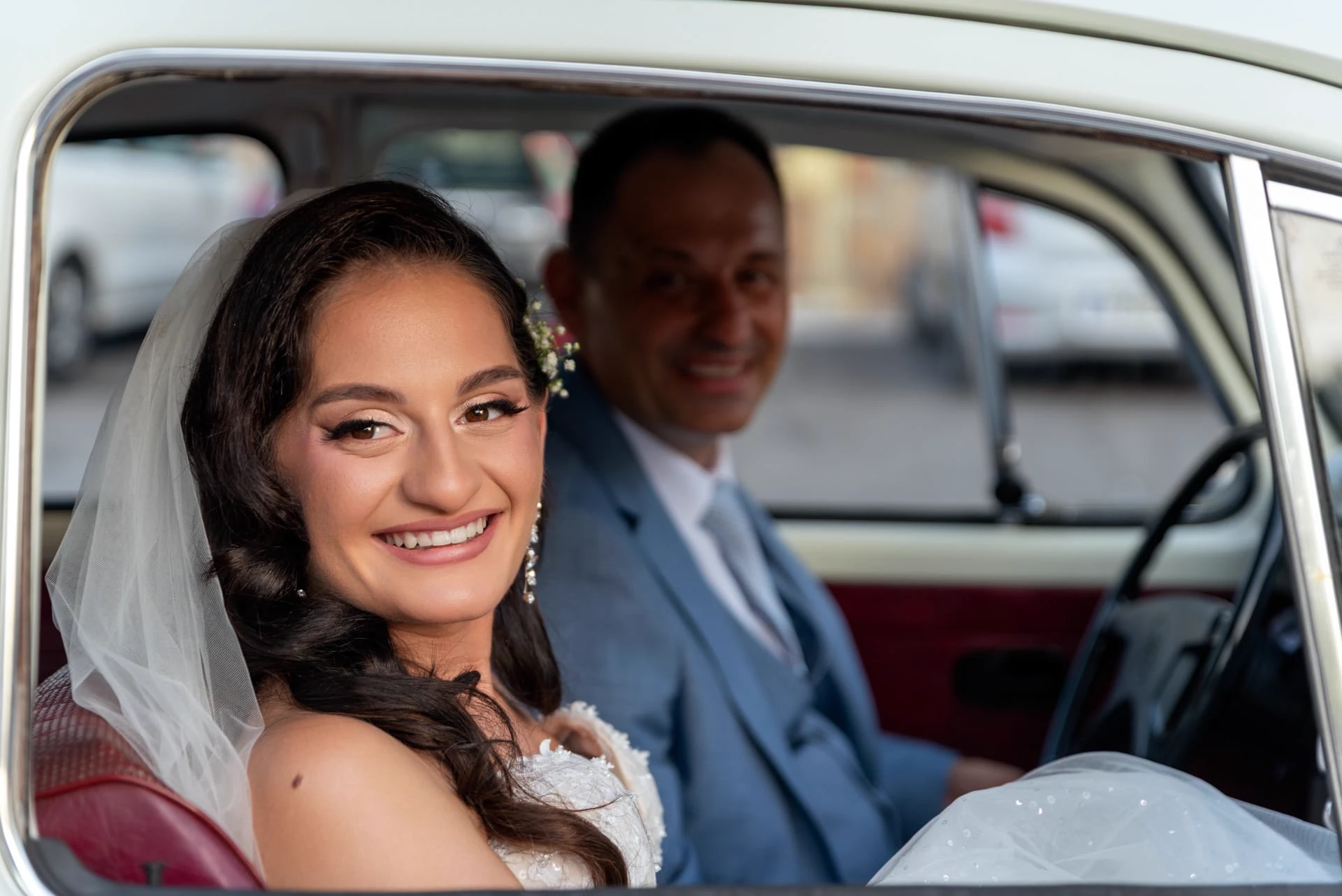
Photographing an Orthodox wedding well depends on more than knowing how to work inside a church.
The ceremony has a sequence, and that sequence affects where attention needs to be at each moment.
The exchange of rings, the crowning, the common cup and the procession do not happen independently. Each one leads into the next, while reactions from the couple, family and koumbaros can happen at the same time.
Experience helps with anticipation.
It means knowing when the important action is about to shift, when it is better to remain still, and when a small change in position can make the difference between simply recording the ritual and preserving the emotion around it.
It also helps with restraint.
There are moments when moving closer would produce a stronger angle but would also become intrusive. There are moments when the better photograph comes from staying back and allowing the ceremony to unfold naturally.
That balance is central to the way we approach wedding photography in Crete: understanding the structure of the day, respecting the ceremony and being ready for the moments that cannot be repeated.
For couples, the result is not a collection of isolated ritual photographs.
It is a complete visual record of how the ceremony actually felt — the formal traditions, the people around them and the small reactions that happened in between.
The Orthodox ceremony is only one part of the wedding story.
Before the church, there may be separate preparations with the bride and groom, family traditions at home, musicians, arrivals and the journey to the ceremony itself.
Afterwards, the rhythm changes again.
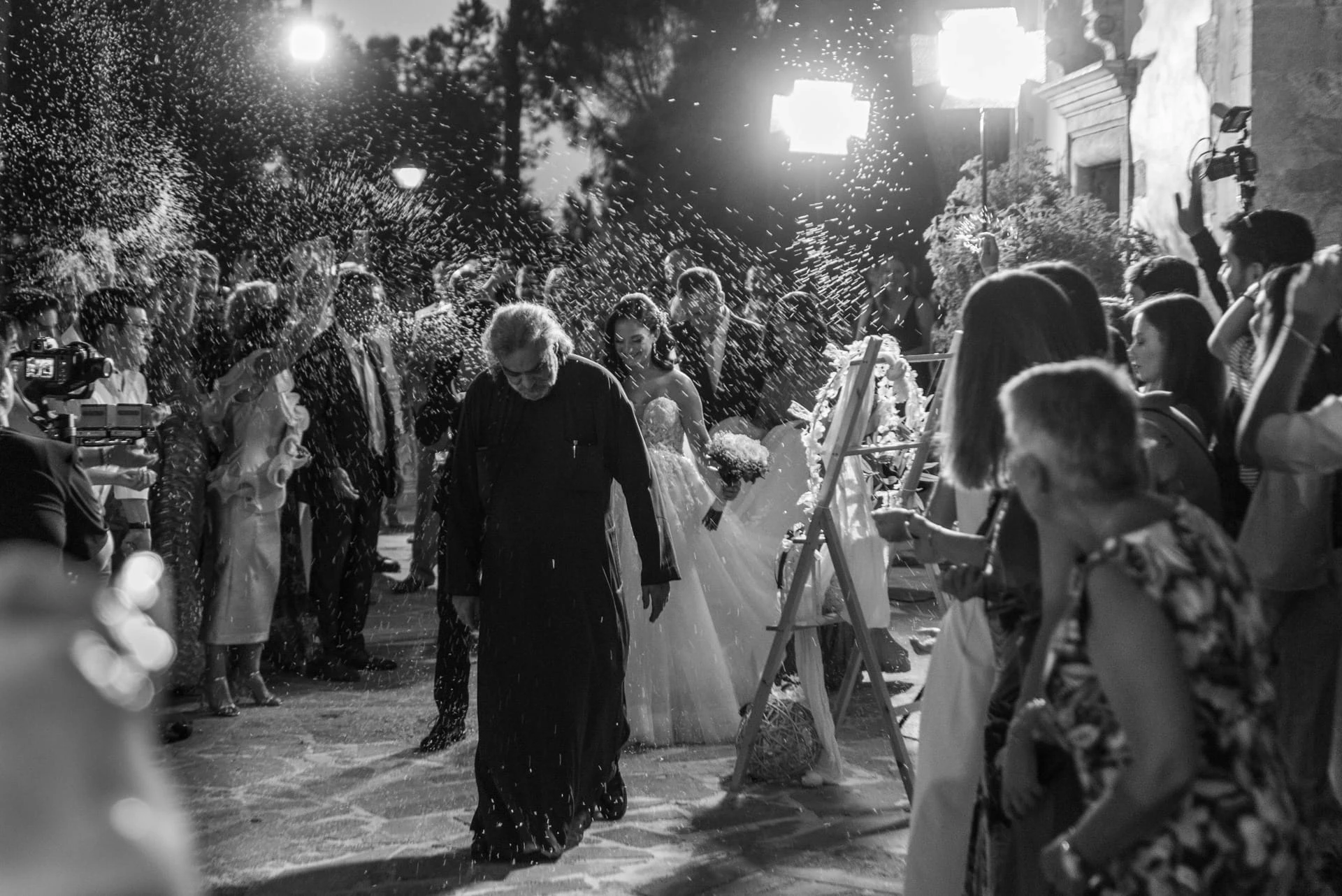
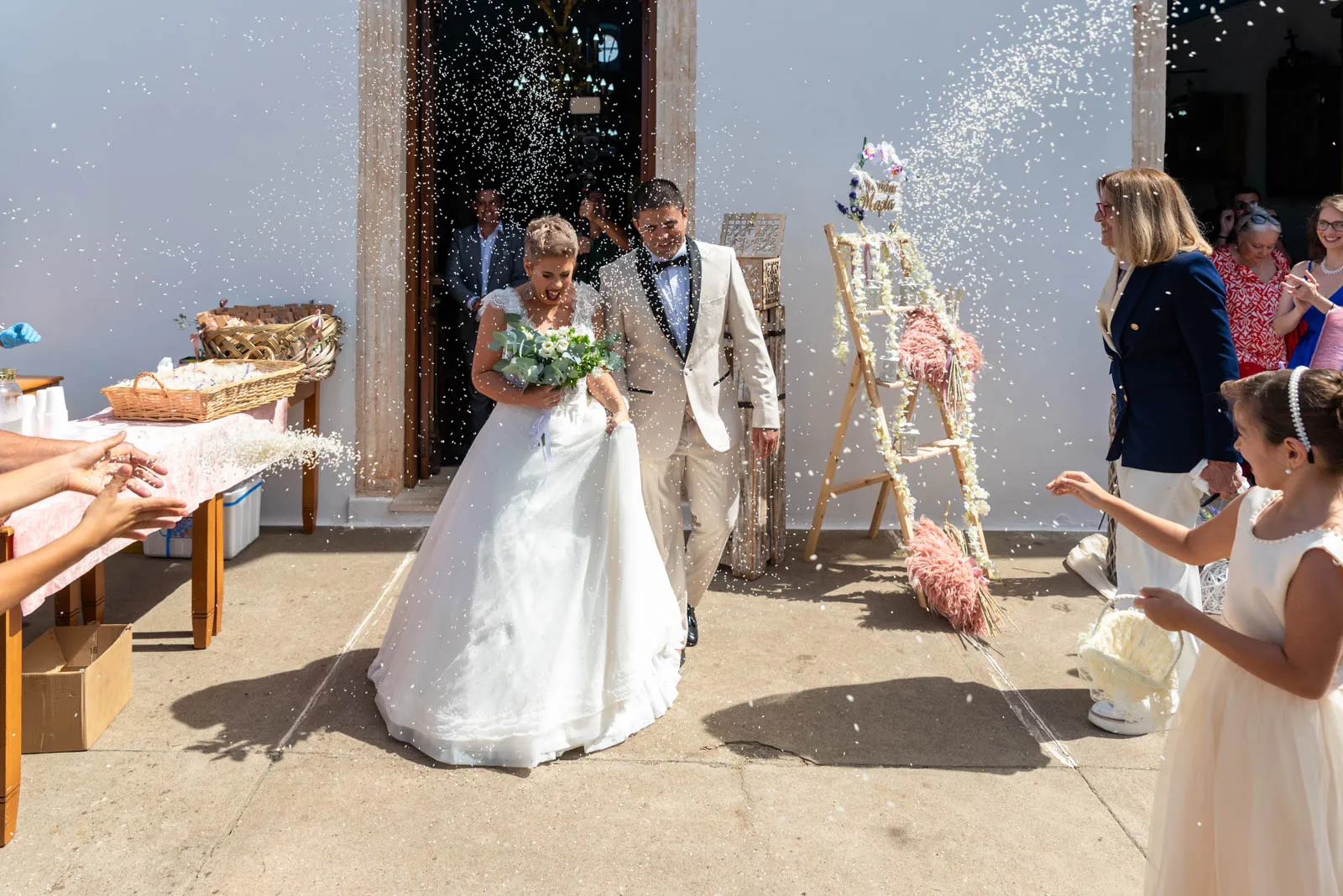
The couple leaves the church, family and friends gather around them, congratulations begin, and the day moves towards portraits, the reception and the evening celebration.
For photography, these transitions matter because they connect the formal ceremony with everything that surrounds it.
A strong wedding story should not make the church feel like an isolated chapter.
The preparation, ceremony, exit and celebration all belong to the same visual narrative.
This is why timing around the ceremony matters just as much as the ceremony itself. Our wedding photography timeline in Crete looks at how preparations, travel, ceremony, portraits and reception can fit together without making the day feel unnecessarily rushed.
The same applies to coverage length.
Some couples need only the essential parts of the day documented, while others want the story to continue through the reception and evening. If you are deciding how much coverage makes sense, see how many hours of wedding photography you need in Crete.
The goal is not to fit the wedding into a photography schedule.
It is to build the photography around the way the wedding will actually unfold.
The ceremony follows a structured sequence that includes the exchange of rings, the crowning with the stefana, the common cup, the circular procession known as the Dance of Isaiah, prayers and blessings. These moments form part of one continuous service rather than separate staged events.
The stefana are the wedding crowns used during the Orthodox Service of Crowning. They are placed on the couple during one of the central parts of the ceremony. We explore the stefana and other wedding traditions in Crete in more detail in our dedicated traditions guide.
The koumbaros or koumbara has an active ceremonial role rather than simply standing beside the couple. Depending on the part of the service, they participate in rituals such as the exchange of the rings and the wedding crowns.
During the ceremony, the couple drinks from a shared cup. It is one of the characteristic rituals of the Orthodox wedding service and happens after the crowning.
The Dance of Isaiah is the circular procession during which the priest leads the newly married couple around the ceremonial table. It introduces movement into a ceremony that, until that point, has largely taken place with the couple standing in one area.
Not always.
Every church is different, and the available space, congregation and way the ceremony is conducted can affect where a photographer can work. Our approach is to move only when it can be done discreetly and without interfering with the priest, the couple or the service.
The underlying Orthodox service follows a recognisable structure, but the wedding around it can vary considerably.
The church, family traditions, music, entrances, the number of guests and the celebration afterwards can make two Orthodox weddings feel very different even when the central ceremony is familiar.
If you are planning an Orthodox wedding in Crete, the ceremony is only one part of the story.
The way the day is structured — preparations, travel, church, family moments, portraits and reception — all affects how naturally the photography can unfold.
If you are still deciding how to shape the day, you can start with our wedding photography in Crete page to see how we approach complete wedding coverage.
For couples who want both still photography and film, our wedding photography and videography in Crete page explains how the two can work together as one coordinated team.
When your date, ceremony location and general structure are clear, you can get in touch and we can look at what coverage makes sense for the wedding you are planning.
Prefer WhatsApp? +30 694 880 4256 • panagiotis@patsiotis.photography